
Firework Safety in Olympia, WAMany of us celebrate Independence Day by getting together with family and friends or barbecuing hot dogs and hamburgers. Others like to celebrate with fireworks. While fireworks can be exciting and provide great entertainment, they also come with the risk of injuries.

Six Simple Safety Tips

  • If a firework didn’t ignite fully, don’t try to re-light it or pick it up. Leave it alone for 20 minutes then spray it with water and toss it.
  • Do not buy any fireworks that are packaged in brown paper. Most likely, they were made for professional displays and could be dangerous to the consumer.
  • Never leave kids unattended with fireworks, even the sparklers. Young children can get injured from the sparklers due to their extremely hot temperatures. Some are as hot as blow torches!
  • Check to make sure fireworks are legal in your area before you even buy them. If you are lighting them off in a restricted area, you will be liable for any injuries or damages.
  • Before throwing away used fireworks, spray them with plenty of water to ensure they won’t start a trash fire.
  • Stay clear of dry brush or tall grasses. These can ignite and spread fire quickly.

We all love to celebrate the 4th of July, but be sure to do so with care.

If you have questions about your home, auto or commercial insurance, call the insurance agents at Trucordia. They have locations throughout Washington State in Olympia, Centralia, Vancouver and Marysville. They have years of insurance experience and can help you insure everything from your home to your auto or business Insurance. They live where you do and are an independent insurance agent, so they can help you find the right company to fit your needs. You can also check out their website, 24/7.

Simple Tips to Prevent an Unwanted Repair

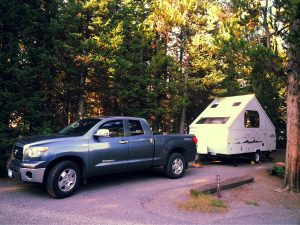
Tips Before Buying a Used Camper in Olympia, WASpring is a great season to start looking for good used campers. Whether you’re looking at a dealership or from a person off of Craigslist, it’s important to know how to look for possible damage or wear.

Look for these trouble areas to save yourself on repairs:

  1. Delamination

RV’s are typically made of a laminated plywood and adhered with an adhesive. This adhesive over time can become deteriorated and cause the side of the RV to delaminate. This delamination can become worse over time and unfortunately, there is not an inexpensive fix. Reasons for delamination can be moisture, heat or simply age. To look for delamination, look down the side of the RV. You’re looking for a change in the plane – it looks almost like a large bubble. Take your hand and press on it. Does it flex or feel like there is air between the exterior fiberglass shell and the interior plywood?

  1. Tires

Tires are easy to inspect. What you’re looking for is small cracks in between the tread. As RVs sit, they develop flat spots and weather cracks. These cracks while largely cosmetic in nature, can over time deteriorate the tire. If the tires are worn or cracked, consider this into the cost of purchasing the RV.

  1. Rodent Damage

Rodents get into everything. Your RV or trailer is no different. In fact, they make ideal homes for rodents because most of the year, they’re sitting undisturbed. When looking for signs of rodents, pull up some seat cushions and look in storage spaces. You’re looking for rodent droppings. Mice and rats leave droppings everywhere. This can both be a health hazard and also damage your RVs interior as they nest.

  1. Water Damage

RV’s are incredibly susceptible to water damage. Truth is many manufacturers in the US don’t build the RVs with as much quality as they could. Water damage is usually pretty easy to spot or smell. If the RV smells musty or feels damp, this is a big indicator. Look for mineral stains or water stains on wood, around skylights and air conditioners on the roof. Also, go around the RV or trailer and push in on all of the sides all the way around. If water got into the walls, it can quickly rot the structural portions of the RV. Pushing on the sides will identify any areas that may be compromised. An RV should be stiff and hard, if it flexes, it is possible there is water damage. Check closely around windows and on the roof.

  1. Appliances

RV appliances are incredibly expensive to replace because of their compact size. If you’re considering a used RV, have the owner or dealer fire up the refrigerator prior to you getting there so you can feel it cool. RV refrigerators can run on electricity, battery or propane. They take about 2 hours to cool down, so before your arrival, ask them to turn it on. Also, while there, test any water heaters and/or other systems that may be important to you.

  1. Canvas

If your trailer or RV has any canvas, look it over closely for mold and staining. Also, if any windows are plastic on your RV, check all zippers and windows for cracks. New canvas tops for a pop-up camper can cost upwards of $3,000.

  1. Floor

The floor of an RV is one of the most common places an RV, camper or trailer is damaged. The floor is typically made up of simple plywood and in older RVs was not protected by anything. Additionally, floors that were protected underneath often time trapped water that entered from above causing the floors to rot. When inspecting a trailer for a rotted floor, get on your hands and knees and push all over the floor looking for flex. If the floor flexes or feels mushy, it is likely rotten and may require replacement. You can also take a small screwdriver or pick and lightly push from underneath (for exposed wood floors only) and see if the material is rotted.

Taking these steps can save you a lot on costly RV repair. We hope you enjoy your camping season. Many memories can be made while camping so we hope we’ve been successful in helping you be an expert when shopping for a used RV.

If you have questions about your home, auto or commercial insurance, call the insurance agents at Trucordia. They have locations throughout Washington State in Olympia, Centralia, Vancouver and Marysville. They have years of insurance experience and can help you insure everything from your home to your auto or business Insurance. They live where you do and are an independent insurance agent, so they can help you find the right company to fit your needs. You can also check out their website, 24/7.

Six Areas to Look to Prevent a Costly Repair

We all know that owning a home is an expensive investment. Unfortunately, you can’t just move in and let it set. Homes require constant maintenance to ensure you don’t get costly damage. We suggest doing a yearly home inspection.

Most people will never venture up onto their roof to see what is going on up there.  A homes roof takes a beating. In the summer, it bakes and the sealant can shrink and expand hundreds of times each year. Making sure your roofing is up to par will save you from costly damage such as mold, water damage, sagging rooflines, pests and much more.

During winter, rainwater can find its way through tiny cracks causing moisture in your attic or between the layers of roofing. Identifying these issues early on can save you thousands of dollars in repairs to the roof itself, drywall, mold or go into your walls creating all sorts of havoc.  It is critically important to understand that your home insurance does NOT cover water intrusion damages caused by deferred maintenance.

Things to look for on your roof inspection:

  1. Missing or damaged shingles
    1. Shingles can become damaged by wind and hail or even just years of use. When inspecting your shingles, make sure the granules are covering the shingle. Ensuring that your shingles are in proper working order will ensure water stays out of your home.
    2. Look for curling shingles, or if wood, cracked or decayed shingles.
  2. Flashing
    1. Your flashing is the metal pieces that go around skylights, butt up against walls and down the valleys on your roof.
    2. Make sure these pieces are whole and without damage such as being twisted upwards, or having holes in them from rust or other damages.
  3. Flat Roofs: Look for obvious patches, cracks, tears, or blisters.
  4. Gutters: Make sure your gutters are clear from debris, are not leaking and are butted up tight against the structure.
  5. Chimneys: Ensure your chimney cap is on tight and if it is brick, inspect for cracks.
  6. Ventilation: Make sure your ventilation caps are clear of obstruction.

Inspecting your roof is a quick and easy job. Take your time and be careful while up there as there are many trip hazards and climbing on and off of the roof onto a ladder can be tricky. But, if done safely, a roof inspection can identify problems that would normally not be covered by your homeowners insurance.

If you have questions about your home, auto or commercial insurance, call the insurance agents at Trucordia. They have locations throughout Washington State in Olympia, Centralia, Vancouver and Marysville. They have years of insurance experience and can help you insure everything from your home to your auto or business Insurance. They live where you do and are an independent insurance agent, so they can help you find the right company to fit your needs. You can also check out their website, 24/7.

Small Changes Can Add Up to Big Savings

How to lower your energy bill in Olympia, WAEveryone loves to save money especially if it’s done with a few easy steps. Electricity bills can add up quickly in your home, but by making a few small changes can lower those bills and save money for other things in your monthly budget.

Easy To Do Steps to Lower Your Electricity Bill

Home Heating

Heating your home uses the most energy, but can offer up the best ways to save money.

Keep your heating system tuned up and inspected. A poorly maintained heating system adds up overtime. Get your heating system inspected by a professional to ensure you’re not wasting energy and money.

Check the furnace filter. When a filter is dirty, they use more energy. Replace the filter when needed and follow the instructions in your furnace manual. Usually every couple of months.

Don’t block heat registers or return ducts.

Home Cooling

Invest in an air conditioner that has a high energy efficient rating (EER). A unit with an EER of 10 will save you twice as much as an EER of 5 would to operate.

Keep the filter clean. Again, the dirtier the filter, the harder it has to work.

Keep your temperature consistent. Instead of constantly changing your thermostat up and down, pick a temperature and stick to it.

Appliances

Insulate your water heater. Your water heater and refrigerator can be prime energy suckers. By insulating your water heater, you could have a great return on savings.

Hang dry more of your clothes. This can save on energy, plus keep your clothes in better condition.

Not using an appliance? Unplug it. Keeping an appliance plugged in uses energy, so if you’re not using an appliance or even a phone charger, unplug it.

Always do a full load. This goes for the dish washer and washing machine. Focus on doing full loads vs. partial loads.

Clean the drain weekly. Unclog the drain of food particles and clean it weekly to keep your dish washer running efficiently.

Keep the thermostat at a specific temperature. The refrigerator is best at 38 to 42 degrees, while the freezer is best at 0 to 5 degrees.

Other Tips

Turn off the lights. This is a simple one! If you’re not in a room, turn the lights off.

Change your light bulbs. More and more people are doing this, but energy efficient light bulbs will help you save money on your energy bill. Plus, they last much longer! Dimmer light switches can be a great addition to your home and use less energy while you enjoy your preference of lighting in a room.

Utilize power strips. Many computers, televisions and other electronics use power when they are off. Plug these devices into a power strip and when you’re not using them, simply hit the power switch button to turn them off.

While we can’t lower your energy bill for you, we can help you find ways to lower your insurance. If you have questions about your home, auto or commercial insurance, call the insurance agents at Trucordia. They have locations throughout Washington State in Olympia, Centralia, Vancouver and Marysville. They have years of insurance experience and can help you insure everything from your home to your auto or business Insurance. They live where you do and are an independent insurance agent, so they can help you find the right company to fit your needs. You can also check out their website, 24/7.


Home Garden Checklist

How to prepare a home garden in Olympia, WASpring season can bring so much joy to garden lovers. Growing your own garden saves money on groceries each week, plus can give you the personal satisfaction of growing your own food. It’s fun when you can involve your kids and teach them a few of your favorite tricks! Many people feel like their garden vegetables taste better. Whether you’re a seasoned pro at gardening or you’re just a beginner, use the tips below to ensure success.

Pick Your Favorite Things

First, decide what you want to plant. If you are new to gardening, start small. You can grow herbs and vegetables in pots.

Find a Location

If you want to plant a vegetable garden, find a location that gets at least six hours of sunlight each day. Also, keep the size of the mature plants in mind. The taller plants should be placed on the north or west side of the garden so they do not shade the other plants. As for watering your garden, it helps to keep it close to your water spigot so you aren’t stuck dragging it across your yard.

Crops need enough spacing between each other. When placing your vegetables in rows, allow at least 18 inches between them.

Give the Soil a Boost

First, test your soil. Soak it with a hose then wait a day to see what it looks like. The next day, grab a handful and see how the soil holds up. If water streams out, add two to three inches of organic matter (manure, compost, decayed leaves, dry grass clippings). When you pick up a handful and the soil does not form a ball, it’s too dry. Add organic matter. You know the soil is ideal when you grab it and it forms a ball and then slightly breaks apart when you drop it.

Water

For most vegetable plants, one inch of water per week is enough. It’s best to water in the morning to retain moisture. When you water, deliver water slowly so the roots absorb the moisture the soil stays hydrated.

Add Mulch

Mulch insulates your soil. It also helps retain moisture, decrease the amount of weeds and protects plants from diseases. Place about two to three inches on organic mulch around your plants.

Use Just Enough Fertilizer

By using organic compost (about 20{da5271d7a1766f221ac35c013f1865b5eb7c6ddff3ebc54411621cbd24b96cb1} of the total makeup of the soil), you will keep it fertile enough so it thrives naturally. Using too much fertilizer can hinder results by decreasing the amount of harvest.

While we can’t tend to your vegetables, we can tend to all of your insurance needs. If you have questions about your home, auto or commercial insurance, call the insurance agents at Trucordia. They have locations throughout Washington State in Olympia, Centralia, Vancouver and Marysville. They have years of insurance experience and can help you insure everything from your home to your auto or business Insurance. They live where you do and are an independent insurance agent, so they can help you find the right company to fit your needs. You can also check out their website, 24/7.


Switching your insurance policy can save you hundreds of dollars a year. But, make sure you consider these things before you make the switch.

5 things to ask yourself before switching insurance in Olympia, WATip #1: Compare Apples to Apples

You’ve seen the commercials – “average savings of $500 a year for those who switched…” Absolutely you can save money. However, be sure that your new quote compares your current policy to the new policy – all coverages, driving records and vehicles the same. Any one thing can make a big difference. Many companies will try to lure you with great savings, but a CLUE report (comprehensive loss underwriting exchange – also known as your claims history) is not completed until after the application is submitted. Online companies are notorious for doing this.

Tip #2: Status Changed

If you’ve recently received a ticket or an accident, moved or purchased a new vehicle, have your current policy changes made prior to shopping. It is entirely possible that your new ride may get you some savings, or result in a price increase. In addition to this, if you’ve recently had a ticket fall off of your driving record, it would be worth calling the company to see if they can remove it now and save you some money for the remainder of your policy term. Regardless, if something changes, be sure to revert to tip #1.

Tip #3: Work with an Independent Insurance Agent

Independent insurance agents are discount detectives and have access to multiple companies. Even better, they know your current situation, history and can give you recommendations across many of their companies. They can compare rates between each of their carriers and let you know the benefits of each company.

Tip #4: Multi-Policy Discounts

When you’re looking for a new policy, be sure to take all things into consideration. You may be focused on your auto insurance, but if you have a package policy (multiple policies with the same carrier) you are likely getting discounts. If you move your auto insurance policy to another carrier, your home insurance may increase as much as 20{da5271d7a1766f221ac35c013f1865b5eb7c6ddff3ebc54411621cbd24b96cb1} eliminating any saving you received. Take all of your policies into consideration. One additional item to consider here is if you have an umbrella policy, this is typically required to follow your home insurance policy. Some carrier require the home and auto to write the umbrella, so talk to you agent about your specific situation.

Tip #5: Your Relationship with your Agent

Knowing your insurance agent and having a business relationship with them is important. They are the ones who will go to bat for you in the event you have a claim or accident. Often times they can help you file that claim or give you recommendation on local companies to help fix your issue. If you have your insurance directly with the company handling your loss, you don’t get this representation. Having a local independent insurance agent is the way to go.

If you have questions about your home, auto or commercial insurance, call the insurance agents at Trucordia. They have locations throughout Washington State in Olympia, Centralia, Vancouver and Marysville. They have years of insurance experience and can help you insure everything from your home to your auto or business Insurance. They live where you do and are an independent insurance agent, so they can help you find the right company to fit your needs. You can also check out their website, 24/7.

Unique Insurance Policies

Unique Insurance Policies in Olympia, WAWhen it comes to the insurance world, you can pretty much insure anything. There are companies that insure things for the obvious insurance reasons of liability, but also some that take risks on things like how much snow will fall in the mountains for a ski resort.
But, when it comes to making a living for celebrities, they are known for their talents! Celebrities have been known to insure their bodies for huge figures up to one billion dollars!

Some items insured by celebrities or other entities include:

  • Voice: Singers are known to insure their voice. After all, it is their voice that creates their income so insuring it ensures they will be able to make a living in the event something happens to their voice.
  • Body parts: Models insure everything from their legs and hands to their teeth and hair! Remember, insurance is about insuring your financial future.
  • Rewards: Insurance policies have been taken out by everyone from car dealerships to cover promotions gone wrong to rewards for providing proof that the Loch Ness monster exists!
  • Abduction – by aliens! You read correctly, people have taken out insurance policies in the event they’re abducted by aliens!
  • Whiskers: Some people have amazing beards! And, as slow as they grow, it would be wise of them to insure their impeccable whiskers.
  • Insuring against a lottery: Some employers take out insurance policies in the even that more than one of their employees wins the lottery and quit, they can cover their business until they find replacements.

We know, insurance is complicated! If you’re in the market for something more ordinary, call the insurance agents at Trucordia. They have locations throughout Washington State in Olympia, Centralia, Vancouver and Marysville. They have years of insurance experience and can help you insure everything from your home to your auto or business Insurance. They live where you do and are an independent insurance agent, so they can help you find the right company to fit your needs. You can also check out their website, 24/7.

What To Do If The Power Goes Out

Power Outage in Olympia, WAWhen nasty weather hits it can be easy to say, “it won’t affect me, our power never goes out!” But, being prepared in the event that you do lose power will save you a lot of nervousness and more.

There are many things to consider when putting together an “out of power” kit. Simple things like blankets can be pulled off of beds, so consider other things like non-perishable foods, ways to light the house and core means to communicate.

Here is a list of items to consider for your powers out safety kit:

  • Non-perishable food such as canned goods, crackers, noodles or vacuum packed tuna
  • Water – make sure you have enough. Water goes fast when you use it for everything from brushing your teeth to other hygiene as well as drinking and cooking.
  • LED flashlights. LED because they last about 5x as long on batteries.
  • Emergency Radio or solar cell phone charger.
  • Candles – Emergency candles can last 7 days burning 24 hours a day! Make sure you get the right ones. Many are also wind resistant.

There are many things to consider for your different types of emergency kits, but fortunately you’re at home! Some things to consider when the power is out at home:

  • Unplug some of your more sensitive electronics. Electronics can become damaged when the power comes back on with the power surge.
  • Keep your refrigerator and freezer closed as much as possible. If the power is going to be out for a while, it can help deter spoilage. If possible, remove more temperature sensitive items like meat and dairy to a smaller cooler and fill with ice on the top.
  • If you suspect your food has spoiled, don’t risk it.

Generators are a great tool for when the power goes out, but they’re typically limited unless you have a whole house generator. If you’re going to use a generator, be sure to determine what appliances you want to run. Refrigerators require a large generator, so determine if it is even possible to run it. Using a generator to run lighting and small portable coolers is reasonable.

When the power goes out, be prepared.

If you have questions about your home, auto or commercial insurance, call the insurance agents at Trucordia. They have locations throughout Washington State in Olympia, Centralia, Vancouver and Marysville. They have years of insurance experience and can help you insure everything from your home to your auto or business Insurance. They live where you do and are an independent insurance agent, so they can help you find the right company to fit your needs. You can also check out their website, 24/7.

Winter Weather Driving Tips

How to drive safe in the snow and ice in Olympia, WAIt’s important for every driver to know how to drive in winter weather conditions. It can be challenging to drive in these conditions, but with the knowledge of the information below, you’ll know how to stay safe on the road.

  • Be sure your car has plenty of antifreeze. You do not want to run out while driving in poor weather conditions.
  • Make sure your windshield wipers are in good condition and that your wiper fluid remains full. Dirty roads can cover a windshield with dirt quickly impacting your visibility.
  • Keep control of your vehicle by not using your cruise control settings.
  • Pack the essentials in your car in case you get stuck. A flashlight, roadside visibility reflectors, a snow brush and ice scraper, jumper cables and a bag of sand to help with traction are all key items that can help you deal with winter weather.
  • Always check the road conditions before you leave on your trip. Once you know the weather conditions, be sure to leave earlier so you don’t have to feel rushed. Giving yourself the extra time allows you to drive at an appropriate and safe speed.
  • Brake appropriately on slippery surfaces. If you start to skid, take your foot off the accelerator until you regain traction. Many people want to slam on the brakes when they notice their car starting to skid.
  • Give yourself more distance between the car ahead of you. When the weather conditions are poor, you will need more space between the car ahead of you to stop.
  • Know where to be extra cautious. Bridges, ramps, overpasses and shaded areas are likely to freeze first and can be extra slick.
  • To defrost your car, turn on your front and rear defrosters. Don’t use your windshield wipers. Once your car has warmed up slightly, use your plastic ice scrapers.

Knowledge is the first step to becoming a safe driver. Having the awareness and driving skills can help you stay safe in less than optimal weather conditions.

If you have questions about your home, auto or commercial insurance, call the insurance agents at Trucordia. They have locations throughout Washington State in Olympia, Centralia, Vancouver and Marysville. They have years of insurance experience and can help you insure everything from your home to your auto or business Insurance. They live where you do and are an independent insurance agent, so they can help you find the right company to fit your needs. You can also check out their website, 24/7.