
Umbrella Policy Cost WA: Budget-Friendly Ways To Add Protection

Your homeowners and auto insurance policies have limits. When someone sues you for more than those limits cover, your personal assets are at risk.
An umbrella policy fills that gap with extra liability protection. At Cross Insurance Agency, we help Washington residents find affordable umbrella policy costs that fit their budgets without sacrificing security.
What Umbrella Policies Actually Cover
An umbrella policy sits above your homeowners and auto insurance, stepping in when a liability claim exceeds your underlying coverage limits. Washington’s median household income of $94,600 means most residents carry substantial assets worth protecting. If someone wins a lawsuit against you for $500,000 and your homeowners liability maxes out at $300,000, that $200,000 gap comes directly from your bank account, retirement savings, or wages. An umbrella policy fills exactly that gap, covering personal injury claims, property damage claims, and legal defense costs beyond what your primary policies pay. The coverage extends across multiple liability exposures simultaneously-a guest injured at your home, a dog bite incident, or an accident on your property all fall under the same umbrella.
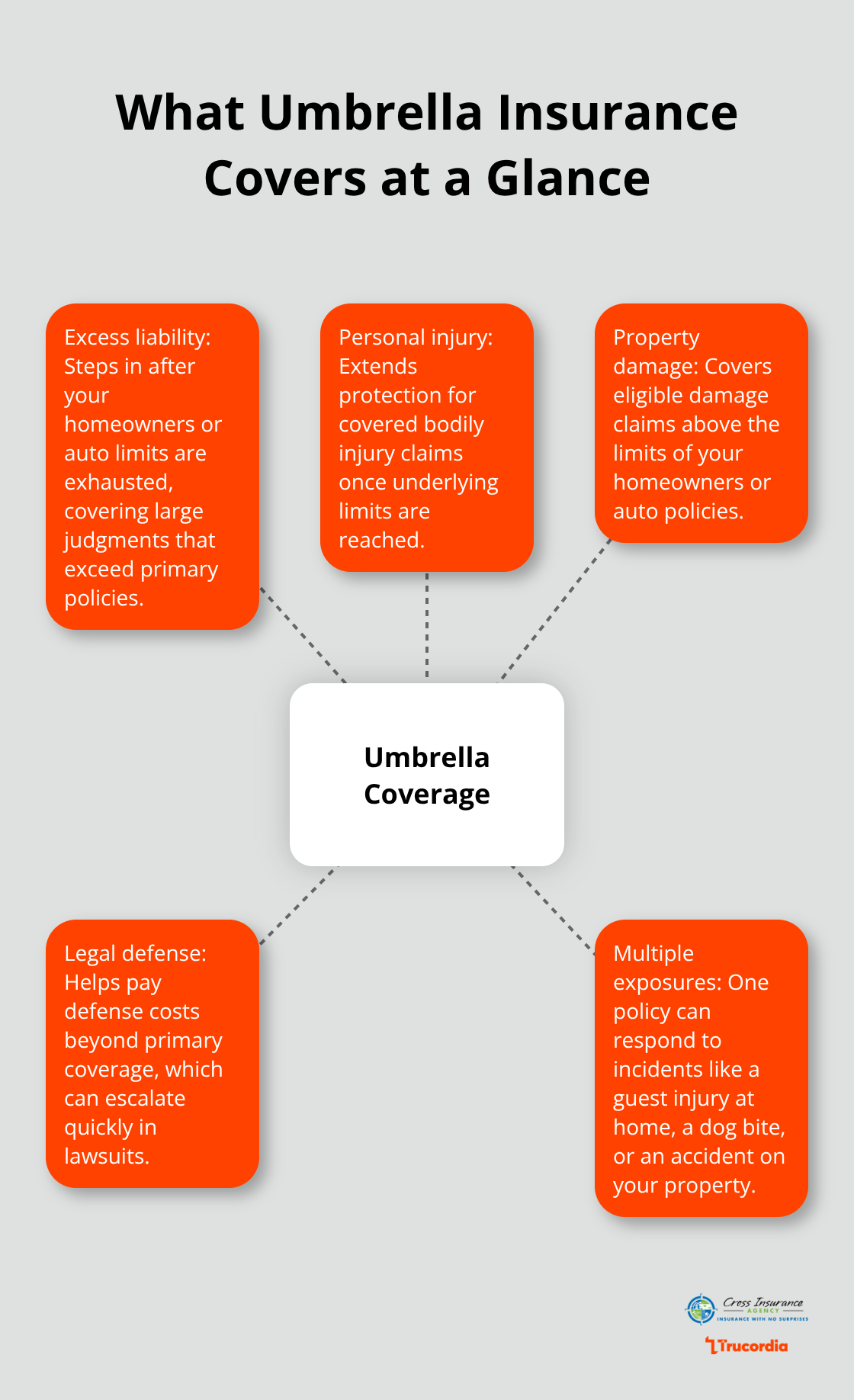
Unlike your homeowners policy, which typically caps liability at $300,000 or $500,000, umbrella policies start at $1 million and scale upward, giving you real breathing room when catastrophic events happen.
Why Your Assets Matter in Washington
Washington’s lack of personal income tax historically meant residents accumulated wealth differently, but a Millionaires Tax will introduce a 9.9% tax on households earning over $1 million annually starting in 2028. This shift makes asset protection more urgent now than ever. Combined with the state’s $16.28 minimum wage in 2024-the highest in the nation-household budgets are tight, meaning most people cannot absorb a six-figure liability judgment. Umbrella coverage costs roughly $150 to $300 annually for $1 million in protection when bundled with existing policies, a fraction of what a single lawsuit could cost. The misconception that umbrella insurance is only for wealthy people misses the reality: middle-class homeowners need it most because they have enough assets to lose but lack the legal resources to defend against major claims. Washington’s seismic and volcanic risk corridor, combined with heavy rainfall in western regions, increases property-related liability incidents-guests slip on wet decks, injuries result from falling branches-making umbrella coverage a practical necessity rather than a luxury add-on.
Matching Coverage to Your Actual Assets
Licensed agents help you match umbrella limits to your actual asset exposure. Most people underestimate what umbrella they need, thinking $1 million is excessive when they carry a $500,000 home and one vehicle. That math ignores future earnings, inherited assets, and the reality that courts award punitive damages in egregious cases. A practical approach starts with totaling your home value, vehicle equity, savings, and retirement accounts-that number guides your umbrella floor. If your assets total $750,000, a $1 million umbrella creates a reasonable buffer; if you own rental properties or run a home-based business, $2 million makes more sense.
Shopping Multiple Carriers for Better Rates
Umbrella pricing varies significantly based on your risk profile and the underlying policies carriers require. Some insurers demand higher homeowners liability limits before writing umbrella coverage, while others remain flexible. An independent agent who shops multiple carriers can compare quotes across different options rather than accepting the first offer from your existing insurer. This comparison process reveals substantial rate differences and helps you identify which carriers align with your coverage needs and budget constraints. The next step involves gathering your current policy declarations and speaking with an agent who can evaluate your specific situation.
What Drives Your Umbrella Cost in Washington
Three Factors That Shape Your Premium
Your umbrella premium hinges on three concrete factors that insurers evaluate before quoting rates. First, your underlying homeowners and auto liability limits directly impact umbrella cost-carriers require minimum underlying coverage before writing umbrella policies, and higher underlying limits typically lower your umbrella rate per million dollars of coverage. If your homeowners policy caps liability at $300,000, most insurers will ask you to raise it to at least $500,000 before they’ll issue umbrella protection. This requirement exists because umbrella policies coordinate with primary coverage; insurers won’t accept gaps between what your homeowner policy pays and where the umbrella begins.
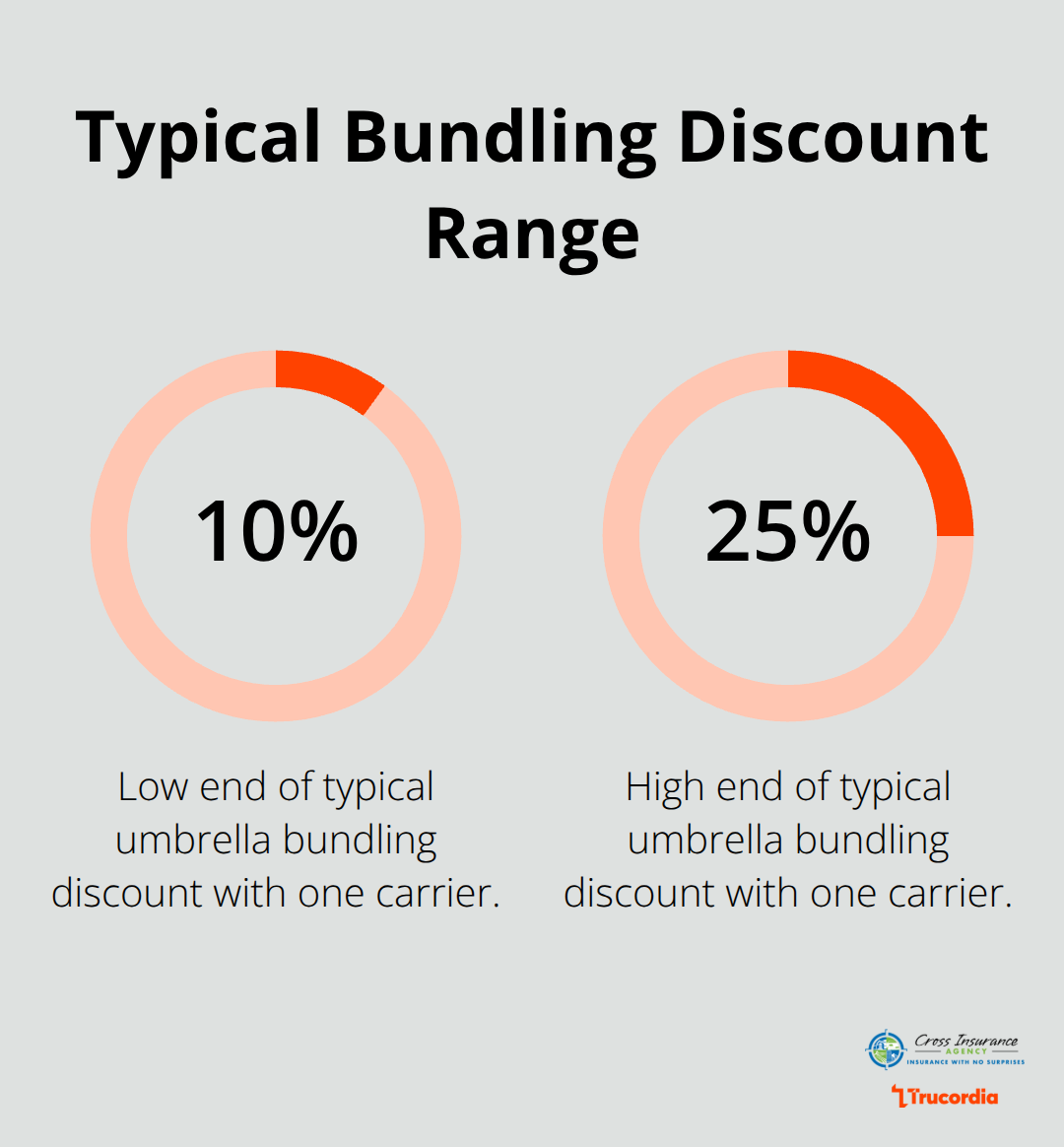
Second, your claims history and current risk profile shape pricing significantly. A clean record with no prior liability claims costs substantially less than a history of incidents. Third, bundling your umbrella with existing auto and homeowners policies generates meaningful discounts-typically 10% to 25% off umbrella premiums when you consolidate coverage with one carrier rather than shopping piecemeal.
How Washington’s Economy Affects Your Rates
Washington’s specific characteristics make these factors even more relevant to your costs. The state’s $16.28 minimum wage and $94,600 median household income create a demographic sweet spot for umbrella buyers-people with real assets but tight monthly budgets who need protection without paying premium prices. If you own a $600,000 home with $200,000 in savings and drive two vehicles, your asset base justifies $1 million to $2 million in umbrella coverage.
Raising your underlying homeowners liability from $300,000 to $500,000 costs roughly $50 to $100 annually but qualifies you for umbrella quotes from more carriers and typically reduces your umbrella rate. An independent agent shopping multiple carriers can identify which insurers offer the best rates for your specific asset profile and claims history.
Location and Risk Premiums in Washington
Carriers price differently based on whether you live in Seattle’s urban core versus rural eastern Washington, and some impose surcharges for properties near water or high-risk seismic zones. Getting multiple quotes from an independent broker reveals these variations rather than accepting one insurer’s standard rate. The umbrella itself might cost $150 to $400 annually for $1 million in coverage depending on your underlying limits, bundling discounts, location within Washington, and risk profile-a modest expense compared to the financial devastation a single lawsuit could inflict on your household.
These cost drivers matter because they show you exactly where to focus when shopping for affordable umbrella protection. Your next move involves understanding which bundling strategies actually save money and how to structure your underlying policies to qualify for the best umbrella rates available.
How to Structure Affordable Umbrella Coverage Without Overpaying
Start Small and Expand Your Protection Over Time
The smartest approach to umbrella insurance isn’t purchasing the maximum coverage you can afford-it’s building a strategy that matches your current assets while leaving room to expand later. Washington residents with tight monthly budgets often assume umbrella protection requires a large upfront commitment, but the reality is more flexible. Start with $1 million in coverage if your assets total between $500,000 and $1 million, then add another million-dollar layer in three to five years as your home appreciates or you accumulate additional retirement savings. This graduated approach costs roughly $150 to $250 annually for the first $1 million when bundled with homeowners and auto policies, then an additional $100 to $150 per million as you scale up.
The financial benefit is immediate: that initial umbrella costs far less than raising your underlying homeowners liability limit from $300,000 to $500,000, yet provides vastly superior protection. Many carriers require you to increase underlying liability limits before writing umbrella policies anyway, so consolidating all coverage with one insurer becomes the logical move.
Consolidate Your Policies for Maximum Discounts
When you consolidate homeowners, auto, and umbrella under a single carrier, discounts typically range from 10% to 25% on your umbrella premium alone. An independent agent shopping multiple carriers reveals which insurers offer the best bundling discounts for your situation-some carriers discount aggressively on umbrella when you bring them your homeowners and auto business, while others price umbrella competitively but offer minimal bundling incentives.
Obtaining quotes from at least three carriers takes roughly 30 minutes and uncovers rate differences that can save $200 to $500 annually on umbrella coverage alone. The carriers with the strongest financial ratings according to AM Best tend to price competitively in Washington’s market, so comparing quotes across carriers rated A or higher ensures you get both affordability and stability. After securing your umbrella quote, verify that your underlying homeowners and auto policies meet your carrier’s minimum requirements-this verification step prevents coverage gaps and qualifies you for the full bundling discount.
Work with an Independent Agent to Navigate Requirements
The process works best when you involve a licensed independent agent rather than contacting insurers directly. An agent already knows which carriers require $500,000 versus $1 million in underlying homeowners liability, which ones offer the steepest bundling discounts, and which impose location-based surcharges for properties near Seattle’s urban core or eastern Washington’s seismic zones. This knowledge saves you hours of phone calls and prevents the common mistake of accepting the first quote you receive.
The conversation with an agent also surfaces specific opportunities for your situation-some people lower umbrella costs by increasing auto liability limits instead of homeowners liability, since auto liability often costs less to raise. Others discover that their existing policies carry unnecessary coverage they can reduce, freeing budget for umbrella protection. Washington’s $16.28 minimum wage means most households operate on tight margins, so these adjustments matter.
Activate Coverage and Coordinate with Primary Policies
Once you’ve selected a carrier and bundled your coverage, the umbrella policy typically activates within 24 to 48 hours, providing immediate protection beyond your homeowners and auto limits. Your umbrella limit should exceed your liquid assets plus several years of income, with most policies written on a “pay on behalf” basis that streamlines claims handling between your primary coverage and the umbrella layer.
Final Thoughts
Umbrella policy cost in WA starts around $150 to $300 annually for $1 million in coverage when bundled with existing policies-a modest expense that shields you from financial catastrophe. Your home, savings, and future earnings face real risk when someone sues you for more than your standard policies cover, and Washington’s median household income of $94,600 means most residents carry substantial assets that deserve protection. Many skip umbrella policies thinking they’re unaffordable luxuries, but the truth is simpler: protection costs far less than the financial devastation a single lawsuit could inflict on your household.
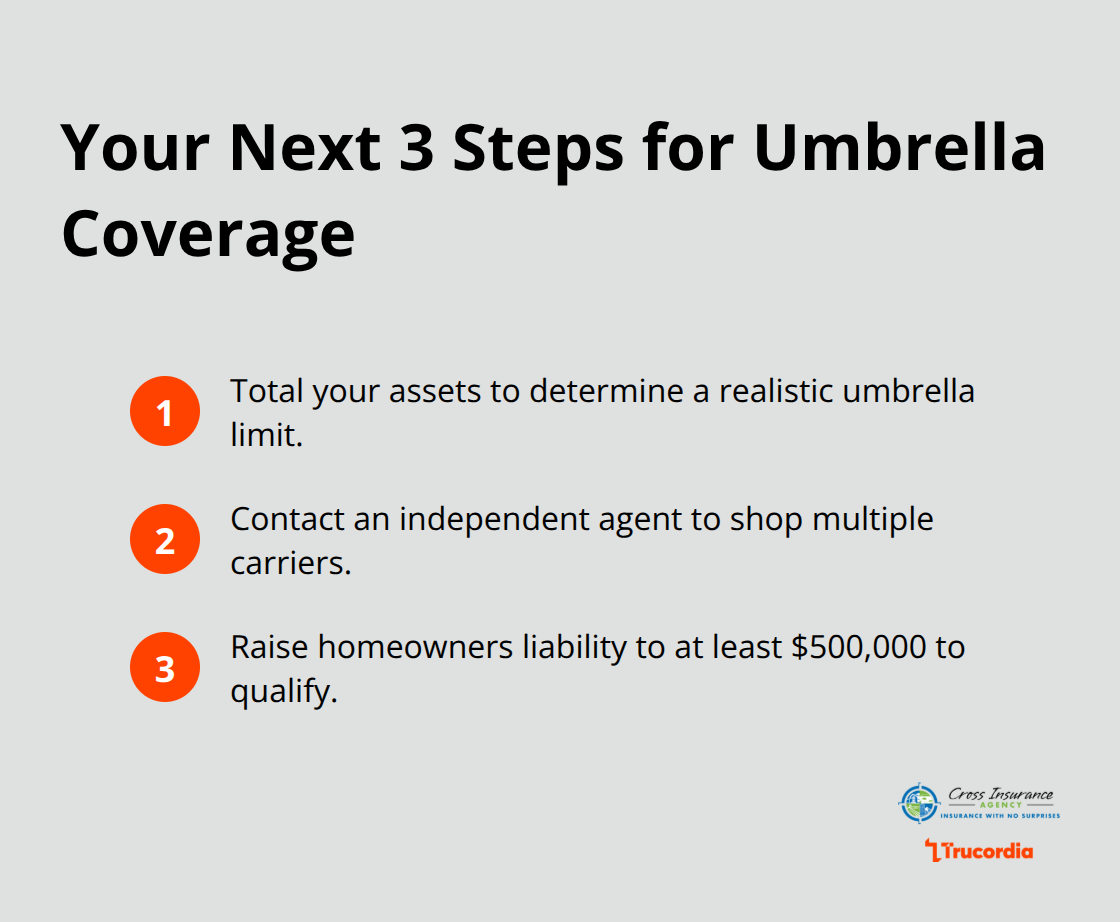
Three concrete steps move you forward. First, total your home value, vehicle equity, savings, and retirement accounts to determine how much umbrella coverage actually makes sense for your situation (most Washington residents need between $1 million and $2 million in protection based on their asset base and income trajectory). Second, contact an independent agent who can shop multiple carriers rather than accepting a single quote from your current insurer, since rate differences across carriers often exceed $200 to $500 annually. Third, raise your underlying homeowners liability limit to at least $500,000 before applying for umbrella protection, as carriers coordinate umbrella coverage with primary policies and won’t write umbrella without adequate underlying limits.
Contact Cross Insurance Agency to discuss your coverage needs and receive quotes from carriers competing for your business. Our licensed agents shop multiple top-rated carriers to deliver choice, bundling discounts, and personalized guidance tailored to your Washington situation. Your assets are worth protecting, and affordable umbrella coverage makes that protection realistic.
Disclaimer: The information provided in this blog is for general informational purposes only and does not constitute legal, financial, or insurance advice. Coverage options, terms, and availability may vary. Please consult with a licensed professional for advice specific to your situation. Artificial intelligence may have been used to generate text and images in some blog articles.


