
Family Umbrella Protection WA: Build Your Personal Safety Net

One accident or lawsuit can wipe out years of financial progress. Most homeowners and car owners in Washington rely only on standard insurance policies, which cap out far too low when serious liability hits.
Family umbrella protection in WA fills those dangerous gaps. At Cross Insurance Agency, we help families build a real safety net that protects everything they’ve worked for.
How Umbrella Insurance Actually Works
The Basic Structure of Umbrella Coverage
Umbrella insurance sits above your existing auto and homeowners policies and activates only when those underlying policies hit their limits. If you cause a serious accident and the damages exceed what your car insurance covers, your umbrella policy picks up the remaining liability. Washington drivers typically carry auto liability limits between $25,000 and $100,000, which sounds adequate until you face a real lawsuit. A single at-fault collision that injures multiple people can easily generate $250,000 to $500,000 in medical bills, lost wages, and pain-and-suffering claims. Your standard policy maxes out far below that threshold, leaving you personally responsible for the gap.
Why the Cost Makes Sense
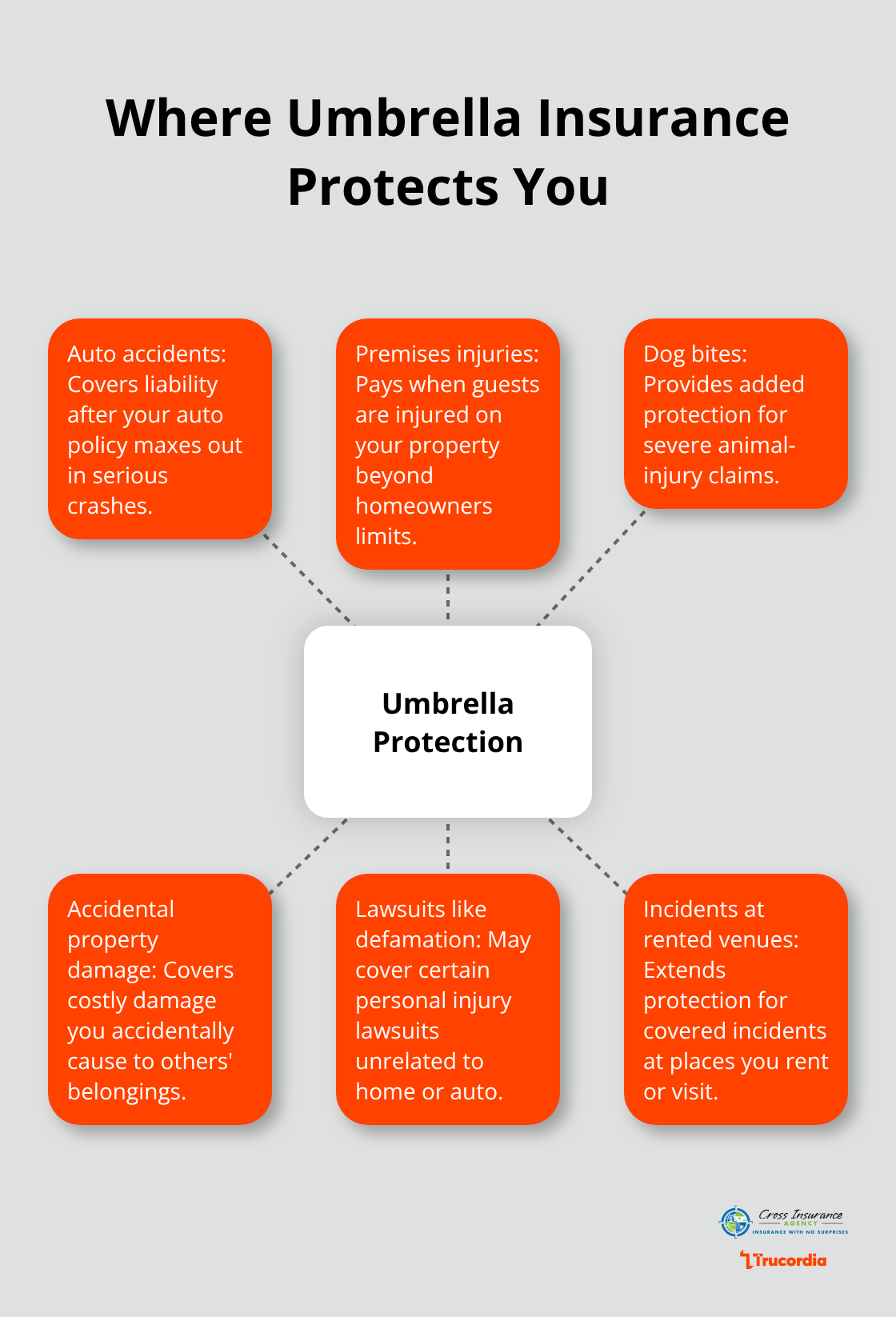
A $1 million umbrella policy costs between $150 and $300 annually for most homeowners, making it one of the cheapest forms of serious protection available. The coverage applies to liability situations across your life-car accidents, injuries on your property, dog bites, or accidental damage you cause to someone else’s belongings. It also protects you against certain lawsuits unrelated to your home or vehicle, though coverage details vary by policy.
Real Liability Exposure Most People Miss
Most people underestimate their actual liability exposure because they assume worst-case scenarios won’t happen to them. Data shows that catastrophic liability claims regularly exceed $300,000. Washington residents who own rental properties, host frequent gatherings, or have teenage drivers face significantly higher risk profiles that standard policies simply cannot address.
Matching Coverage to Your Actual Risk
The solution is straightforward: assess what your auto and homeowners policies actually cover today, calculate your net worth and future earning potential, then purchase umbrella coverage that reflects the real financial damage a lawsuit could inflict. A $1 million umbrella policy protects most middle-class families adequately, though high-income earners or those with substantial assets often need $2 million or $3 million in coverage. The specific limit should match your situation, not some generic recommendation. Once you understand how umbrella insurance works, the next step involves identifying the specific scenarios where this protection matters most.
When Umbrella Coverage Actually Kicks In
A rear-end collision at a Seattle intersection sends a minivan into oncoming traffic, injuring four people across two vehicles. Medical bills exceed $600,000 within weeks. The at-fault driver’s auto policy maxes out at $100,000, leaving a $500,000 gap that umbrella insurance covers immediately. This scenario plays out regularly in Washington-not as a worst-case fantasy but as documented claims that destroy unprotected families financially. Without umbrella coverage, that driver faces wage garnishment for years, potential asset seizure, and bankruptcy that could have been prevented for roughly $200 annually.
The Serious Accident Reality
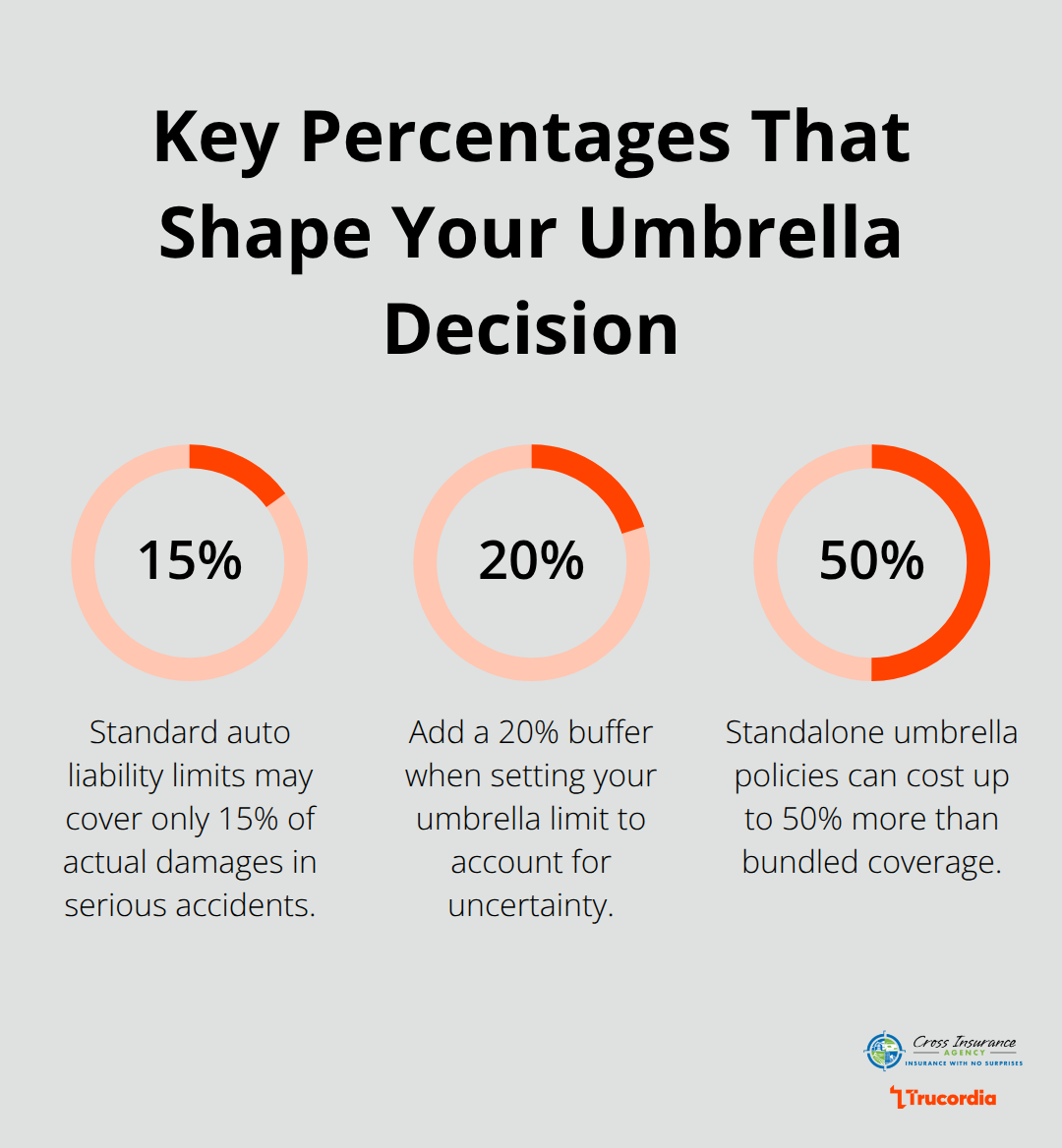
Car accidents generate the highest umbrella claims because liability exposure scales quickly with injury severity. A single collision involving multiple vehicles or pedestrians easily produces $250,000 to $750,000 in combined medical expenses, rehabilitation costs, and pain-and-suffering awards that juries regularly grant. Washington courts have awarded settlements exceeding $1 million in cases involving permanent disability or death. Standard auto liability limits between $25,000 and $100,000 cover maybe 15 percent of these actual damages. The umbrella policy then activates to cover the remainder, protecting your home, savings, and future income from creditors pursuing the judgment.
Property and Premises Liability Claims
Homeowner scenarios create equally expensive liability exposure that most people ignore until they face one. A guest slips on your icy driveway in January, breaks both legs, and misses eight months of work as a physical therapist earning $120,000 annually. Medical bills add another $85,000. The homeowners policy covers $300,000 in liability, which handles this incident, but what if a trampoline accident paralyzes a neighborhood child? What if your dog attacks a jogger? These incidents regularly generate $400,000 to $800,000 in settlements. A homeowners policy alone leaves you personally liable for amounts exceeding its limits. Your umbrella policy eliminates that personal exposure entirely, covering the full judgment amount up to your policy limit.
The Lawsuit Beyond Your Property
Umbrella coverage also protects against liability situations that don’t involve your home or vehicle directly. If you accidentally damage someone’s boat, cause injury at a rented venue, or face a defamation lawsuit, your umbrella policy often provides coverage where your standard policies create gaps. These situations happen less frequently than car or home accidents, but they generate surprisingly large claims when they do occur. A single incident costs $150,000 to $400,000 in legal defense and settlement costs alone. Having umbrella protection means these unexpected liabilities never force you to liquidate retirement accounts or sell assets to cover judgment amounts. The real question becomes how much coverage you actually need for your specific situation.
How Much Umbrella Coverage Do You Actually Need
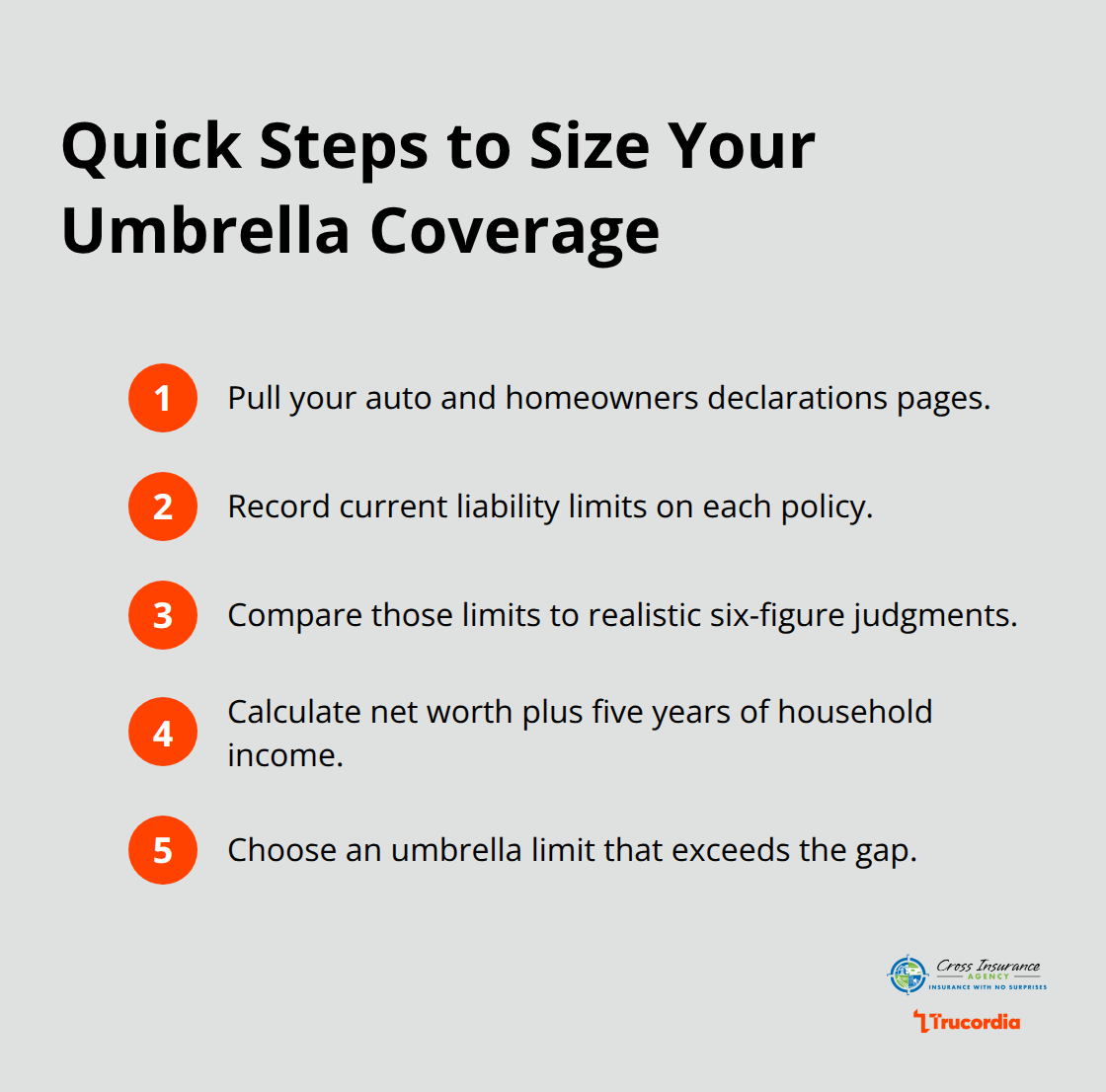
The gap between what your current policies cover and what a serious lawsuit could cost is precisely where umbrella insurance operates, but most Washington families guess at their coverage needs instead of calculating them. Start by pulling your auto and homeowners declarations pages and write down the liability limits on each policy. Most people discover their auto liability maxes out at $100,000 and their homeowners liability at $300,000, which sounds substantial until you face a $600,000 judgment. Your net worth and future earning potential matter far more than generic recommendations when you decide your umbrella limit.
Calculate Your Coverage Based on Real Assets
A family with $400,000 in home equity, $150,000 in retirement savings, and two income earners should carry at least $1 million in umbrella coverage to protect those assets from creditors pursuing a judgment. High-income earners or those with rental properties need $2 million to $3 million in coverage because their earning potential and asset exposure run significantly higher. Washington residents earning over $200,000 annually face substantially greater lawsuit targets than those earning $60,000, so coverage should scale accordingly. Calculate your total net worth plus five years of household income to establish a realistic floor for your umbrella limit, then add 20 percent as a buffer. This approach beats relying on industry averages or whatever limit your neighbor carries.
Bundling Creates Real Savings That Multiply
Purchasing umbrella insurance through the same agent who handles your auto and homeowners policies generates immediate discounts that shopping separately never produces. Insurers reward bundling because they retain more of your premium dollars and reduce administrative costs, passing those savings to customers who consolidate coverage. A $1 million umbrella policy costs approximately $150 to $300 annually when bundled with existing auto and homeowners policies, but that same coverage often costs 30 to 50 percent more when purchased standalone. Bundling also simplifies claims handling because a single agent manages your entire coverage structure instead of coordinating between multiple carriers. Request quotes from at least three independent agents in Washington who represent multiple carriers, not captive agents who work for single insurers. The difference between a quote of $200 annually and $320 annually for identical $1 million coverage represents real money over ten or twenty years of ownership.
Understand Your Policy’s Activation Requirements
Your umbrella policy activates only after your underlying auto or homeowners policy exhausts its limit, meaning you must maintain those underlying policies with adequate limits to trigger umbrella protection. If you carry only $50,000 in auto liability but your umbrella policy requires a minimum underlying limit of $100,000 to activate, your umbrella coverage won’t protect you in that scenario. Most insurers in Washington require minimum underlying auto limits of $100,000 and homeowners limits of $300,000 before umbrella coverage applies. Intentional acts, criminal conduct, business activities, and certain contractual liabilities fall outside umbrella coverage entirely, which means you need separate policies for rental properties or business operations. Ask your agent specifically which situations your umbrella policy excludes before purchasing, because those exclusions matter more than the overall limit.
Final Thoughts
Family umbrella protection in WA stops being optional once you understand what a single lawsuit actually costs. Without it, years of financial discipline disappear in months when liability claims exceed your standard policy limits. With it, your family’s assets stay protected regardless of what accident or injury claim comes your way.
Start by pulling your auto and homeowners policy declarations and identifying your current liability limits, then calculate your total net worth plus five years of household income to determine how much umbrella coverage you actually need. Most Washington families find that $1 million provides adequate protection, though higher earners or those with substantial assets benefit from $2 million or $3 million limits. Contact an independent insurance agent who represents multiple carriers and can quote umbrella coverage bundled with your existing policies, since bundling cuts your umbrella premium by 30 to 50 percent compared to purchasing coverage separately.
A $1 million umbrella policy typically costs $150 to $300 annually when bundled, making it one of the cheapest forms of serious financial protection available. An independent agent shops multiple top-rated carriers, explains exactly which situations your umbrella policy covers and which it excludes, and ensures your underlying auto and homeowners limits meet the minimum requirements to activate umbrella protection. Contact Cross Insurance Agency to discuss your specific situation with a licensed agent who understands Washington liability risks and can deliver quotes from multiple carriers in one conversation.
Disclaimer: The information provided in this blog is for general informational purposes only and does not constitute legal, financial, or insurance advice. Coverage options, terms, and availability may vary. Please consult with a licensed professional for advice specific to your situation. Artificial intelligence may have been used to generate text and images in some blog articles.


