
Teen Driver Insurance Olympia: Safest Routes to Affordable Coverage

Insuring a teen driver in Olympia comes with real costs and real risks. Parents face higher premiums because statistics show drivers under 20 have crash rates three times higher than drivers aged 20 and older.
At Cross Insurance Agency, we help families find teen driver insurance in Olympia that protects their budget without cutting corners on coverage. The right policy combines affordability with the liability protection your family needs.
Why Your Teen Needs Different Insurance Than You Do
Teen drivers represent a measurable risk that standard auto insurance policies simply don’t address. The Insurance Institute for Highway Safety reports that teen drivers have crash rates over 4 times those of drivers 20 and older per mile driven, and this isn’t a minor statistical variance. When a teenager gets behind the wheel, insurance companies know the probability of a claim increases dramatically. This reality shapes everything about teen driver coverage, from the premiums you’ll pay to the specific protections you need in place. Standard policies written for experienced drivers leave gaps that can expose your family to serious financial consequences.
The Cost of Teen Driver Accidents
Washington state doesn’t require separate teen driver policies, but the data shows why you need one anyway. According to the National Highway Traffic Safety Administration, motor vehicle crashes are the leading cause of death for teenagers in the United States. A single accident involving your teen can trigger medical bills exceeding $50,000, vehicle repair costs in the thousands, and potential liability claims from other parties. If your teen causes an injury to someone else, your liability coverage becomes critical protection. Without adequate limits tailored to teen driving patterns, a serious accident could threaten your family’s assets and future income. This isn’t theoretical-it’s why insurance companies charge more for teen drivers and why you need to structure that coverage carefully.
Legal Protection and Liability Exposure
Washington requires minimum liability coverage of 25/50/10, meaning $25,000 per person and $50,000 per accident for bodily injury, plus $10,000 for property damage. These minimums sound adequate until you consider what a serious injury actually costs. A teenager who causes a crash that injures another person faces medical expenses, lost wages, and pain-and-suffering claims that far exceed these state minimums. Your homeowner’s policy won’t cover auto-related liability, so your auto insurance becomes your only financial shield. Many parents in Olympia find that increasing liability limits to 100/300/100 or higher makes sense when a teen driver enters the household (this protects not just your vehicle, but your savings, home equity, and future wages if someone pursues a judgment against you).
Why Standard Coverage Falls Short
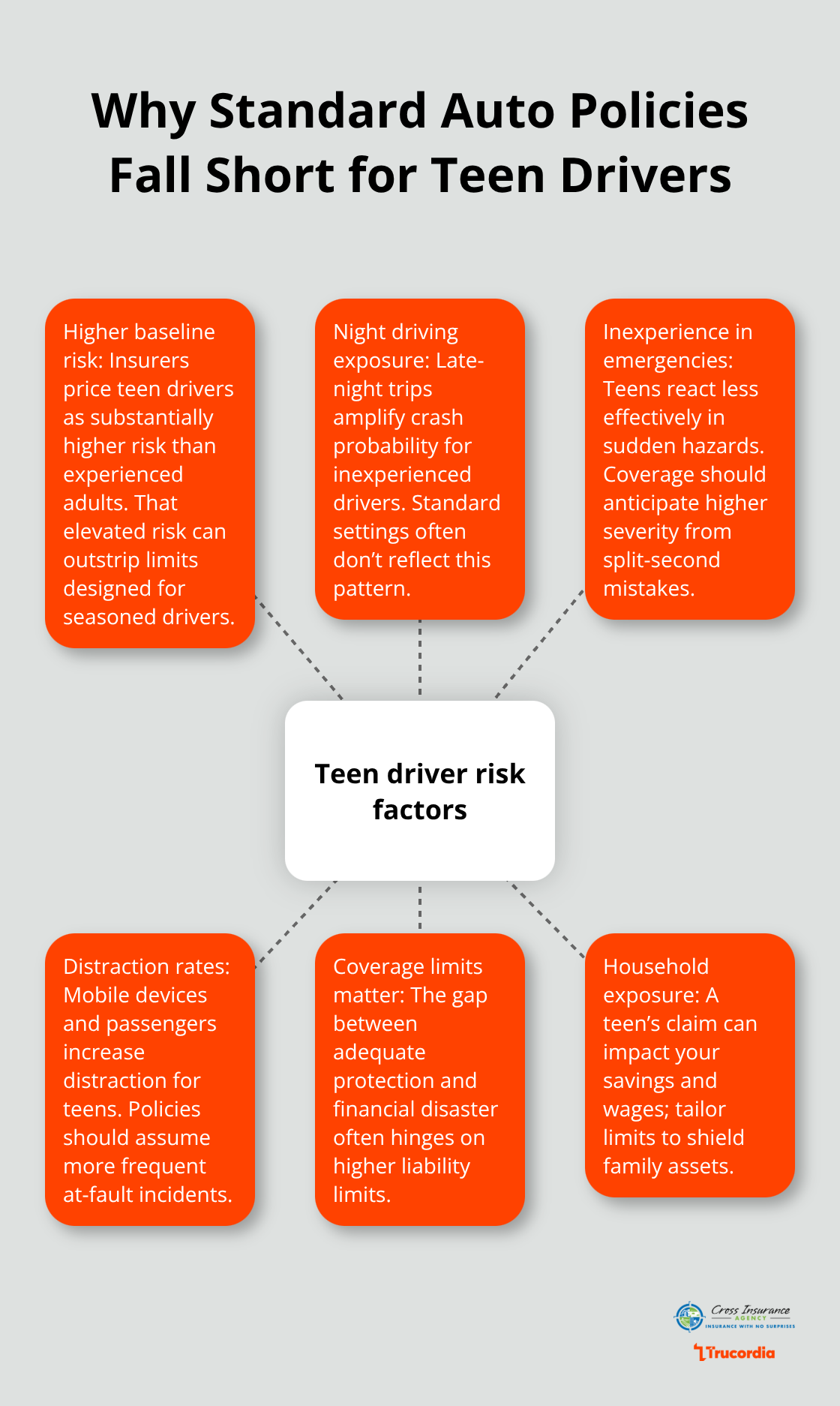
A standard auto policy treats all drivers the same way, which creates a dangerous blind spot when your teen takes the wheel. Insurance companies price policies based on risk, and teen drivers represent substantially higher risk than experienced adults. Your existing coverage may not account for the specific patterns of teen driving-late-night trips, inexperience in emergency situations, and higher rates of distraction. Adding a teen to your policy without reviewing your limits leaves your family exposed (the difference between adequate protection and financial disaster often comes down to coverage limits, not just the policy itself).
The next step involves understanding how to find affordable coverage that actually matches your teen’s risk profile.
Finding Affordable Teen Driver Coverage in Olympia
Getting quotes from multiple insurers takes roughly 30 minutes but saves up to 25% on teen driver premiums. Insurance companies price teen drivers differently based on their underwriting models, so State Farm, Allstate, GEICO, and regional carriers like Pemco all weigh teen risk factors through different formulas. Your teen might qualify for better rates at one company versus another. When you request quotes, provide identical information across all carriers-same vehicle, same coverage limits, same deductibles-so you’re comparing apples to apples.
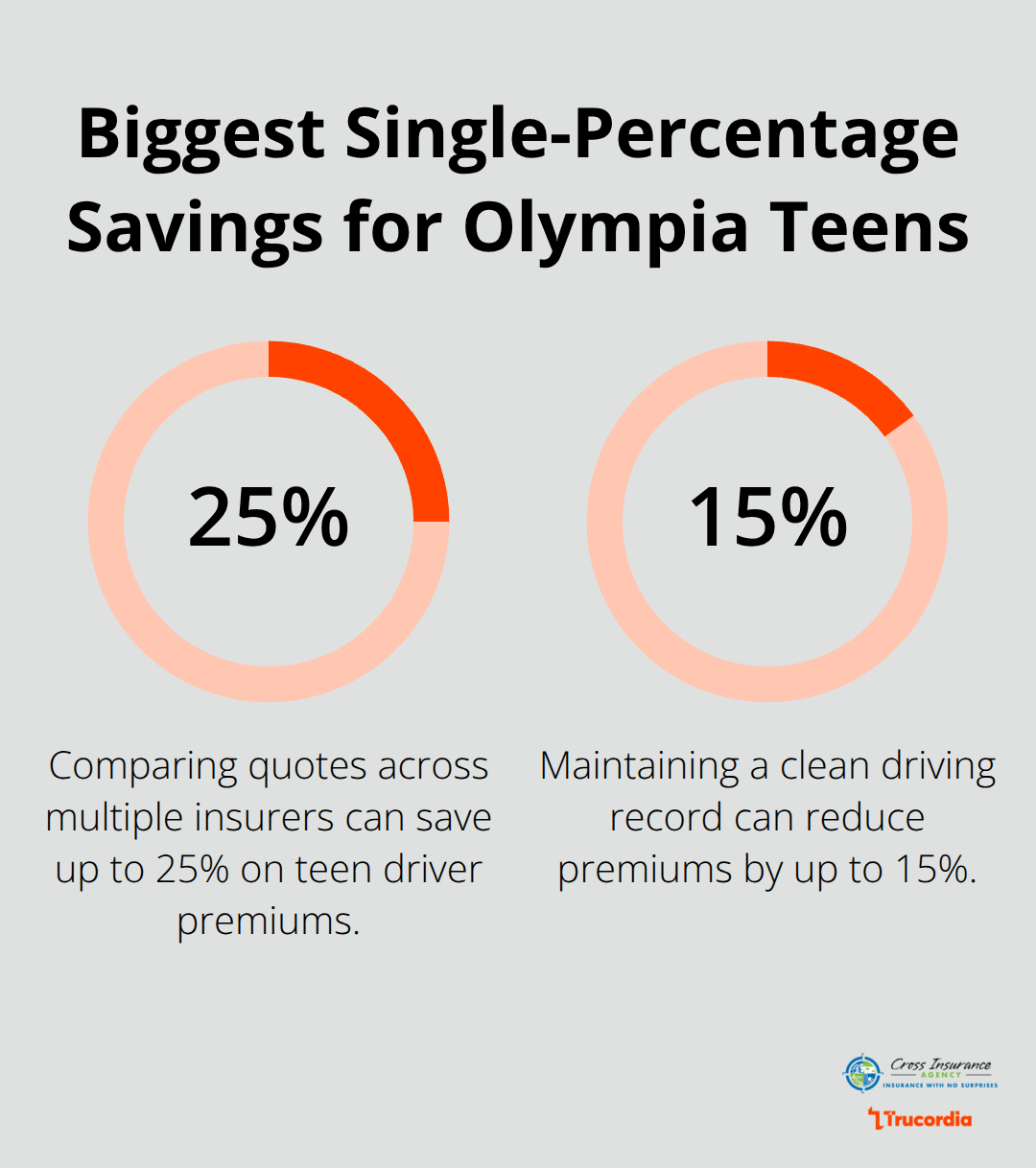
The difference between the highest and lowest quote for the same coverage often exceeds $1,000 over six months, which makes shopping non-negotiable rather than optional.
Stacking Discounts Cuts Premiums Significantly
Insurance companies offer discounts specifically for teen drivers that most parents never claim. Good student discounts typically run 3 to 5 percent off premiums when your teen maintains a B average or higher, and this applies at virtually every major carrier. Driver safety courses approved by Washington State can reduce premiums another 5 to 10 percent-courses from National Safety Council or Defensive Driving.com qualify at most insurers.
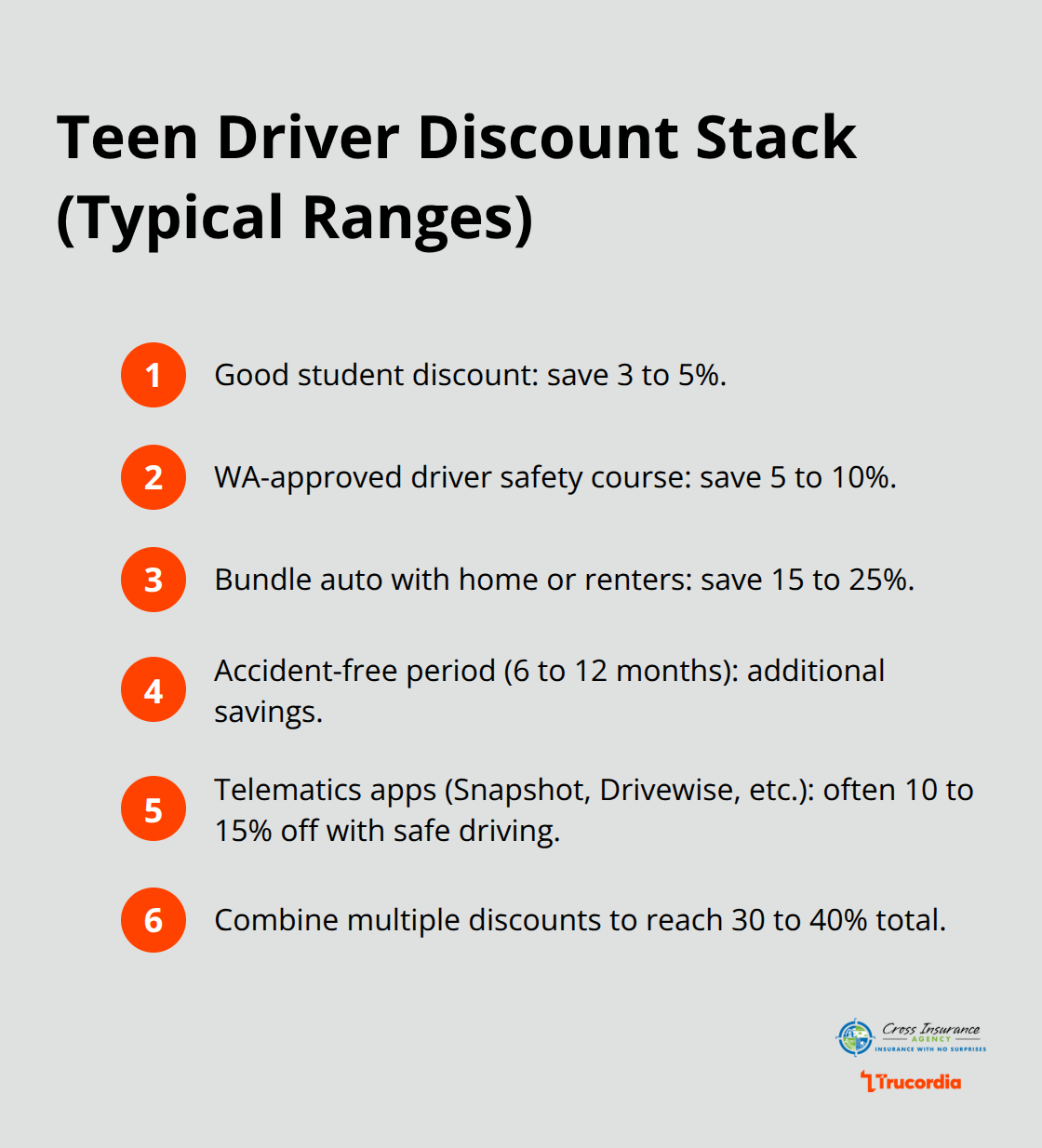
Bundling your teen’s auto policy with your homeowners or renters coverage generates 15 to 25 percent savings across the entire bundle, according to data from the National Association of Insurance Commissioners. If your teen maintains a clean driving record for six to twelve months, most carriers offer accident-free discounts that lower rates further. The combination of three or four discounts can cut your teen driver premium by 30 to 40 percent, transforming an expensive line item into something manageable.
Local Agents Access Carriers Online Tools Miss
An independent agent in Olympia has access to carriers that online quote tools don’t display, which matters significantly for teen drivers. Regional carriers sometimes offer better teen rates than national companies because they price based on local accident data and driving patterns specific to Washington. Independent agents connect families with multiple carriers simultaneously rather than forcing you to visit individual company websites, saving time while expanding your options. Local agents also handle the claims process differently-when your teen has an accident, a neighborhood agent advocates on your behalf rather than treating you as a ticket number. Agents know which carriers in the Olympia area respond fastest to claims and which ones dispute coverage questions. This local knowledge prevents costly mistakes like discovering mid-claim that your coverage has a gap.
Moving Forward With Your Teen’s Coverage
The quotes you collect and the discounts you stack form the foundation of affordable teen driver insurance, but the real protection comes from matching coverage limits to your family’s actual exposure. Your next step involves reviewing what liability limits make sense for your situation and understanding how monitoring devices can lower premiums while keeping your teen safer on the road.
How to Actually Lower Your Teen’s Insurance Premium
Good grades and driver safety courses sound like obvious ways to reduce premiums, but the numbers tell a different story about which strategies actually move the needle. A B-average good student discount saves roughly 3 to 5 percent on your teen’s premium, which on a $2,000 annual policy amounts to $60 to $100 annually. Driver safety courses approved by Washington State generate 5 to 10 percent discounts, adding another $100 to $200 in savings. Combined, these two strategies might reduce your premium by $200 to $300 per year-meaningful money, but not transformative. The real leverage comes from what happens after your teen gets behind the wheel. Insurance companies care far more about actual driving behavior than credentials on a diploma.
Clean Driving Records Deliver the Biggest Savings
A teen who maintains a clean driving record qualifies for accident-free discounts that can reduce premiums by up to 15 percent. This is where the substantial reductions happen: when your teen proves through months of safe driving that they represent lower risk than the average sixteen-year-old. Insurance companies replace statistical assumptions with documented evidence of safe habits.
Telematics Devices Replace Guessing With Data
Telematics devices and monitoring apps shift the insurance equation in your favor because carriers base teen driver premiums partly on assumptions about behavior. When your teen uses a monitoring app like Snapshot from Progressive or Allstate’s Drivewise, the insurer collects real data about acceleration, braking, speed, and time of day your teen drives. Teens who use these apps average 10 to 15 percent premium reductions because insurers replace statistical guessing with actual driving patterns. Some carriers like Pemco offer usage-based programs specifically marketed to teen drivers, pricing based on documented safe behavior rather than age alone.
Restricted Driving Privileges Cut Risk and Costs
The most effective approach combines monitoring with restricted driving privileges during high-risk periods. Crash data from the National Highway Traffic Safety Administration shows teen crash rates spike between 9 PM and midnight, so limiting your teen’s driving to daytime hours during the first six to twelve months of licensure dramatically reduces accident probability. Restricting nighttime driving during this critical early period costs nothing but saves 5 to 10 percent on premiums while cutting actual crash risk substantially.
Stacking Strategies Produces Real Savings
Parents who implement both monitoring devices and graduated driving restrictions see cumulative discounts reaching 25 to 35 percent, transforming a $2,000 annual premium into something closer to $1,300 to $1,500. This combination works because insurers reward measurable risk reduction, not just paperwork. The strategies that produce the largest premium cuts all share one characteristic: they provide insurers with concrete evidence that your teen represents lower risk than typical teen drivers.
Final Thoughts
Affordable teen driver insurance in Olympia comes down to three actions: comparing quotes across multiple carriers, stacking every available discount, and implementing monitoring devices or driving restrictions that prove your teen represents lower risk than statistics suggest. Families who pay the least don’t sacrifice coverage-they match their protection to actual exposure and provide insurers with evidence of safe driving behavior rather than relying on age-based assumptions. Local agents access carriers that online quote tools never display, and regional companies often price teen coverage differently than national competitors.
When your teen has an accident, a local agent advocates on your behalf during the claims process instead of treating you as a policy number. Install a monitoring app like Snapshot or Drivewise and restrict nighttime driving during the first six to twelve months of licensure-these two actions combined typically reduce premiums by 25 to 35 percent while cutting actual crash risk substantially. If your teen maintains a B average or completes a driver safety course approved by Washington State, claim those discounts before your policy starts.
Contact Cross Insurance Agency to connect with independent agents who shop multiple top-rated carriers for teen driver insurance in Olympia and handle claims with the responsiveness your family deserves. Our licensed agents find the coverage that fits your budget while protecting your assets and future income. Get quotes from at least three carriers this week to start lowering your teen’s premium today.
Disclaimer: The information provided in this blog is for general informational purposes only and does not constitute legal, financial, or insurance advice. Coverage options, terms, and availability may vary. Please consult with a licensed professional for advice specific to your situation. Artificial intelligence may have been used to generate text and images in some blog articles.


