Fleet Insurance Olympia WA: Managing Multiple Vehicles With One Plan
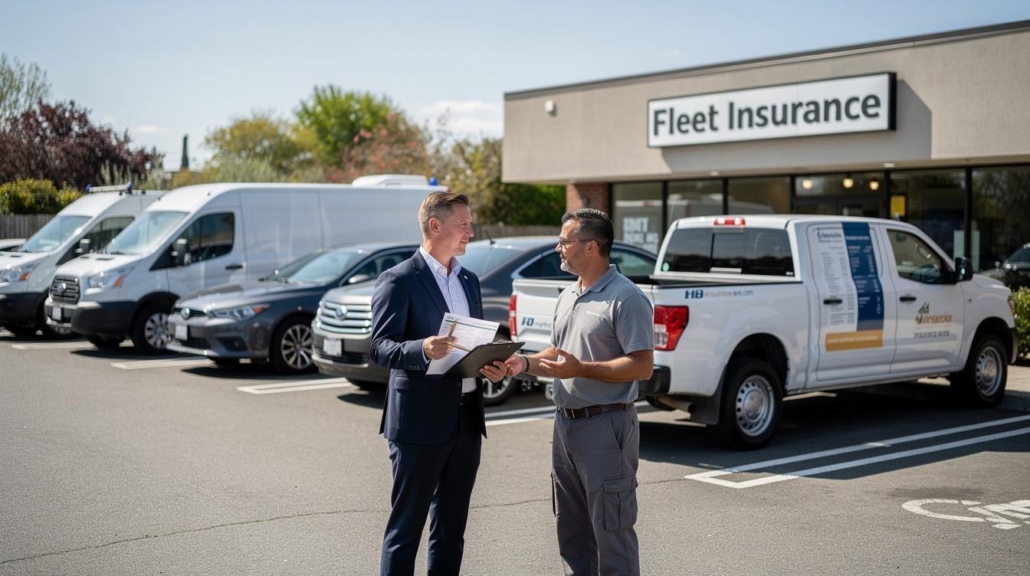
Running multiple vehicles for your Olympia business creates complexity. Fuel costs, maintenance, insurance paperwork-it piles up fast.
Fleet insurance in Olympia, WA consolidates all your vehicles under one policy, cutting through the administrative headache. At Cross Insurance Agency, we help local businesses simplify their coverage and reduce costs.
Why Fleet Insurance Costs Less Than Multiple Individual Policies
Separate Policies Create Separate Expenses
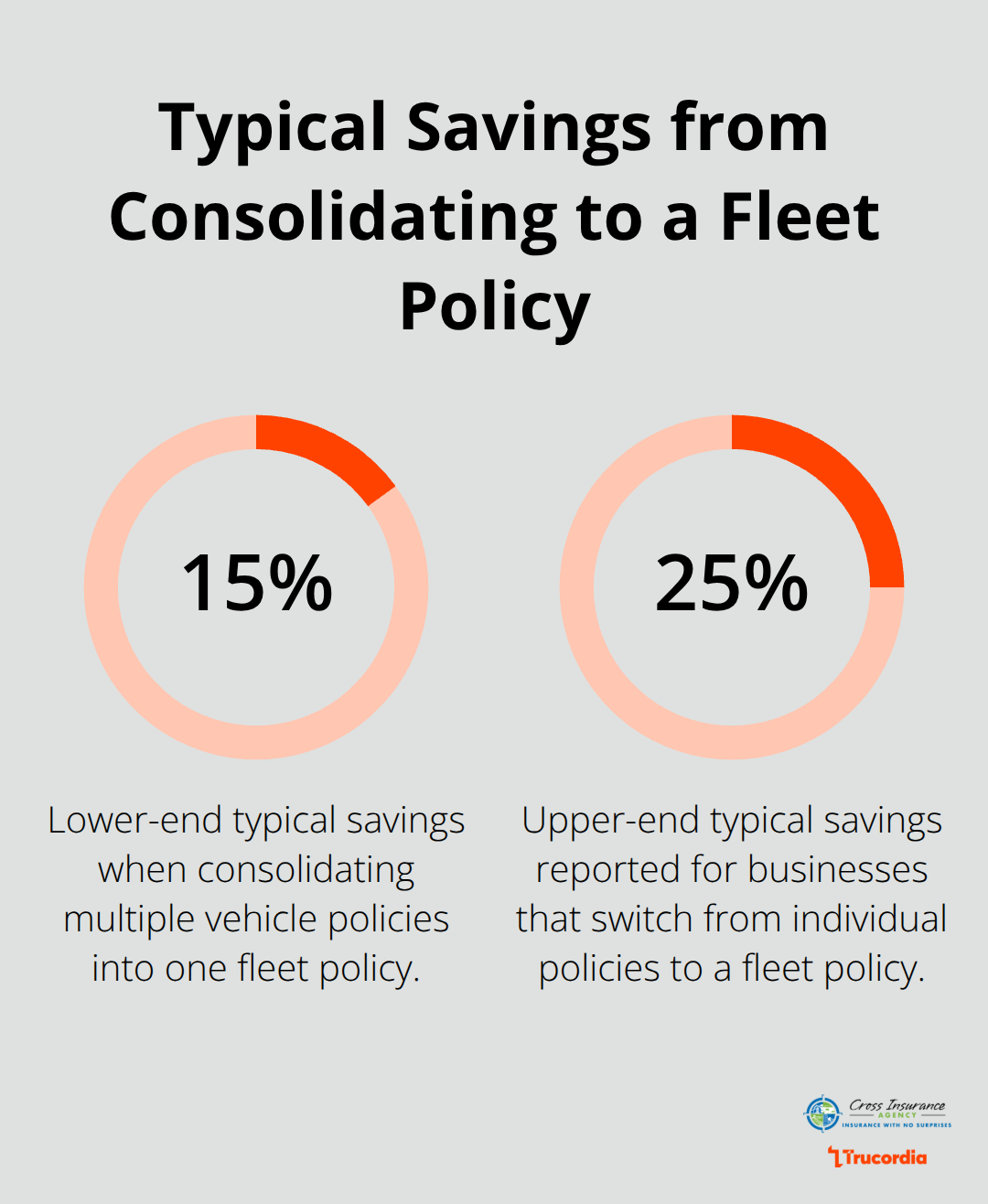
Managing vehicles separately means paying separate premiums, separate deductibles, and separate administrative fees for each vehicle. A business with five vehicles pays five different policy renewal dates, five separate invoicing processes, and five individual claims procedures. That’s inefficient and expensive. According to the National Association of Insurance Commissioners, businesses that consolidate their auto coverage typically save 15-25% compared to maintaining individual policies. The savings come from several sources: insurers offer volume discounts for fleets, you eliminate redundant administrative overhead, and you reduce the likelihood of coverage gaps between policies.
Liability Exposure Multiplies Across Your Fleet
When you operate multiple vehicles, each one represents a separate liability risk. A delivery driver causes an accident. A service vehicle hits someone’s property. An employee uses a company vehicle for business purposes. If these vehicles sit on individual policies, you manage different coverage limits, different deductibles, and potentially different exclusions across your entire operation. One underinsured vehicle can expose your whole business to financial catastrophe. Fleet policies establish consistent liability protection across all vehicles, so you know exactly what protection you have, regardless of which vehicle is involved in an incident.
Washington state requires minimum liability coverage of $25,000 per person and $50,000 per accident, but most Olympia businesses operating multiple vehicles should carry higher limits. A commercial auto incident can easily exceed minimum requirements, and medical costs in Washington continue climbing.
One Point of Contact Accelerates Claims Resolution
When an accident happens, you don’t want to spend hours figuring out which policy covers which vehicle. Fleet insurance means one point of contact, one claims file, and one agent who understands your entire operation. This matters tremendously when you’re running a tight schedule. A plumbing company with four service vans loses productivity every minute those vehicles sit idle. A fleet policy speeds up the claims process because the carrier sees your entire business relationship, not just one vehicle. You also avoid the frustration of coverage disputes between multiple carriers.
As you evaluate fleet options for your Olympia operation, the next step involves understanding exactly what coverage types protect your business and how these policies actually work in practice.
What Your Fleet Policy Actually Protects
Commercial Auto Liability Covers Injuries and Property Damage
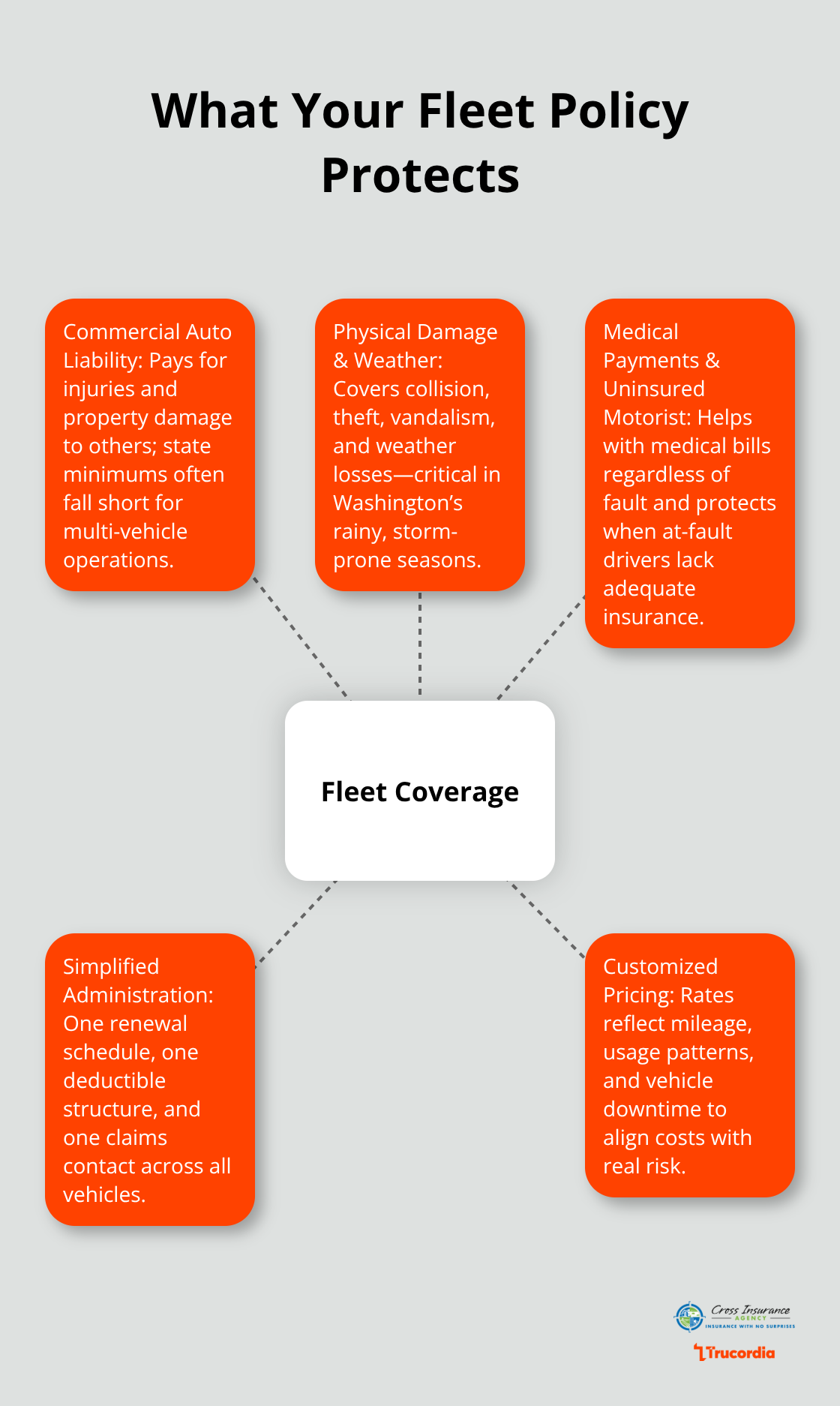
Commercial auto liability pays for injuries and property damage your vehicles cause to others, and this protection layer handles most claims. Washington’s minimum liability requirement of $25,000 per person and $50,000 per accident falls short for businesses running multiple vehicles. A serious accident involving a commercial vehicle generates medical bills exceeding $100,000 within hours, and jury awards in commercial liability cases frequently reach $250,000 to $500,000 or higher. Your fleet policy should carry limits that match your actual exposure, not just meet the state minimum.
Physical Damage and Weather Protection Matter in Washington
Physical damage coverage protects your own vehicles from collisions, theft, vandalism, and weather damage-a significant concern in Washington’s rainy climate where weather-related claims spike during fall and winter months. Your vehicles face constant exposure to rain, hail, and wind damage that individual drivers might ignore but fleet operators cannot afford to overlook. This coverage keeps your vehicles operational and prevents weather events from sidelining your business.
Medical Payments and Uninsured Motorist Protection
Medical payments coverage pays hospital and medical bills for your drivers and passengers regardless of fault, which accelerates recovery and prevents employees from filing personal injury lawsuits against your business. Uninsured motorist protection covers your drivers when another vehicle hits them but that driver lacks adequate insurance-a situation that happens more frequently than most business owners realize. According to the Insurance Research Council, approximately one in eight drivers nationwide operates without insurance, and those uninsured drivers often cause accidents that leave your business footing the bill without this protection.
Simplified Administration Across Your Entire Fleet
Fleet policies consolidate all coverage types under a single renewal date, single deductible structure, and one point of contact for claims. Instead of managing five separate policies with different renewal dates scattered throughout the year, you handle one renewal cycle and one set of deductibles across your entire fleet. When a driver gets in an accident, you contact one agent who has immediate access to all your vehicle information, driver records, and coverage details rather than hunting through multiple policy documents. This operational efficiency means your office staff spends less time on insurance administration and more time running your business.
Customized Pricing Reflects Your Actual Operations
Fleet policies allow carriers to account for operational differences in your business. A delivery company with high-mileage vehicles pays different rates than a service company where vehicles sit parked most days. Pricing that reflects your real risk profile (rather than charging a generic commercial rate) means you avoid overpaying for coverage that doesn’t match your actual operations. Understanding how carriers evaluate your specific fleet sets the stage for finding the right plan that balances protection with cost.
Selecting Coverage That Matches Your Fleet’s Real Risk
The difference between adequate fleet insurance and overpaying for unnecessary coverage comes down to matching your policy to actual operations. Most Olympia businesses make one critical mistake: they accept whatever coverage limits their agent suggests without questioning whether those limits reflect their specific risk profile. A plumbing company with vehicles parked at job sites faces different exposure than a delivery service with high-mileage routes across multiple counties.
Document Your Fleet’s Actual Operations
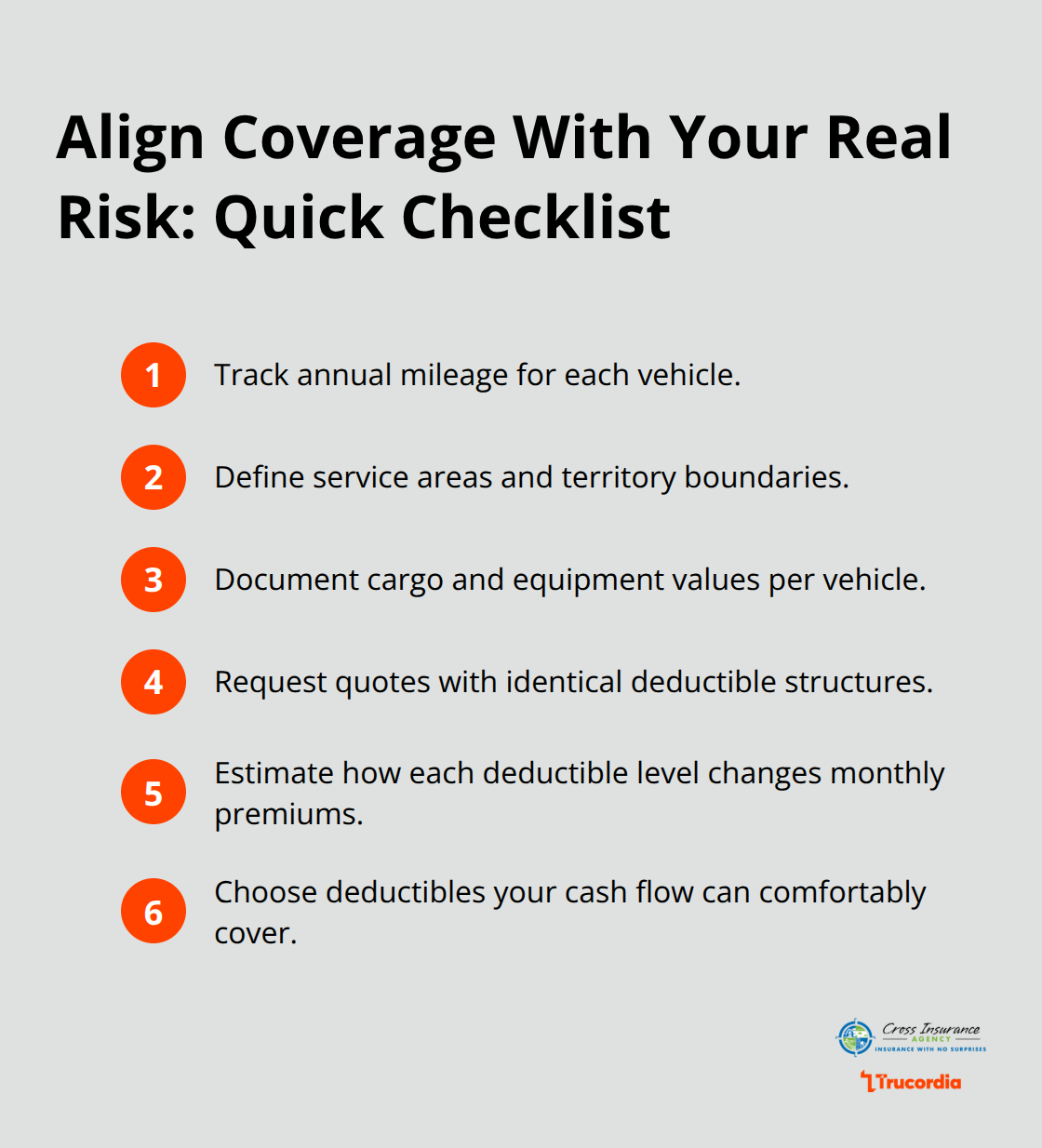
Start with your fleet’s annual mileage, typical service areas, and the dollar value of cargo or equipment your vehicles carry. This data becomes your negotiating foundation when comparing policies. Request quotes with identical deductible structures so you can see how different carriers price your specific operation. Deductibles directly affect your monthly premium-a $1,000 deductible costs significantly less than a $500 deductible-but the wrong deductible level creates financial pain when accidents happen.
Select deductibles your business can actually cover from operating cash flow without disrupting payroll or operations. If a single accident with a $2,500 deductible would strain your finances, that deductible is too high regardless of the premium savings.
Bundling Creates Genuine Savings Beyond Fleet Coverage
Washington businesses operating multiple vehicles almost always carry general liability, commercial property, or workers compensation insurance. Bundling your fleet policy with these other coverages typically generates 10-20% discounts on your total commercial insurance spend, according to data from the National Association of Insurance Commissioners. The savings compound annually-a business saving $3,000 per year through bundling reinvests that money into operations, equipment, or hiring rather than paying unnecessary premiums.
When requesting quotes, ask carriers for their bundling discounts in writing and specify exactly which policies qualify. Some carriers advertise bundling discounts that apply only to specific coverage combinations, so you need transparency about what actually qualifies.
Local Expertise Prevents Coverage Gaps in Washington Operations
Washington’s regulatory environment differs from other states in ways that directly impact fleet insurance requirements and claims handling. An agent familiar with Washington Department of Labor regulations understands how commercial vehicle classification affects your rates and coverage options. Agents working in Olympia specifically understand local claim patterns-weather-related damage spikes during winter months, accident frequencies vary by neighborhood and highway corridor, and local repair shops have different pricing than regional chains.
This local knowledge translates into better policy recommendations and faster claims resolution when incidents occur. A carrier’s national claims adjuster might dispute a weather damage claim by applying standards from Arizona or Texas; a local agent advocates for your business using Washington-specific precedent. An independent agent who shops multiple top-rated carriers allows you to compare how different insurers handle your specific risk profile rather than accepting a single recommendation.
Final Thoughts
Consolidating your fleet under one policy eliminates the administrative chaos of managing multiple vehicles separately. You gain consistent liability protection across your entire operation, faster claims resolution when accidents happen, and genuine cost savings that compound year after year. Businesses in Olympia, WA that switch to fleet insurance Olympia WA plans typically recover their savings within the first renewal cycle through volume discounts and eliminated redundant fees.
Pull together your annual mileage data, service areas, and equipment values, then request quotes with identical deductible structures so you can compare apples to apples. This documentation becomes your foundation for negotiating better rates and identifying coverage gaps that individual policies might have left exposed. Select deductible amounts your business can actually cover without disrupting operations rather than chasing the lowest premium.
Washington’s regulatory environment and local claim patterns create advantages for businesses working with agents who understand Olympia specifically. A local agent recognizes how winter weather affects damage claims, understands Washington Department of Labor requirements that impact your rates, and advocates for your business using state-specific precedent when disputes arise. Cross Insurance Agency connects Olympia businesses with tailored commercial coverage by shopping multiple top-rated carriers and identifying bundling opportunities that reduce your total insurance spend.
Disclaimer: The information provided in this blog is for general informational purposes only and does not constitute legal, financial, or insurance advice. Coverage options, terms, and availability may vary. Please consult with a licensed professional for advice specific to your situation. Artificial intelligence may have been used to generate text and images in some blog articles.


