
Commercial Landlord Insurance WA: Simplified Coverage for Property Managers

Running rental properties in Washington means managing more than just tenants and maintenance. Commercial landlord insurance in WA protects your building, your income, and your finances when things go wrong.
At Cross Insurance Agency, we’ve helped countless property managers understand what coverage they actually need. This guide walks you through the essentials so you can make informed decisions about your property.
What Commercial Landlord Insurance Actually Covers
Commercial landlord insurance in Washington covers three critical areas that protect your rental property investment. First, it covers physical damage to your building structure, roof, and attached systems like HVAC and plumbing when fires, windstorms, or hail strike.
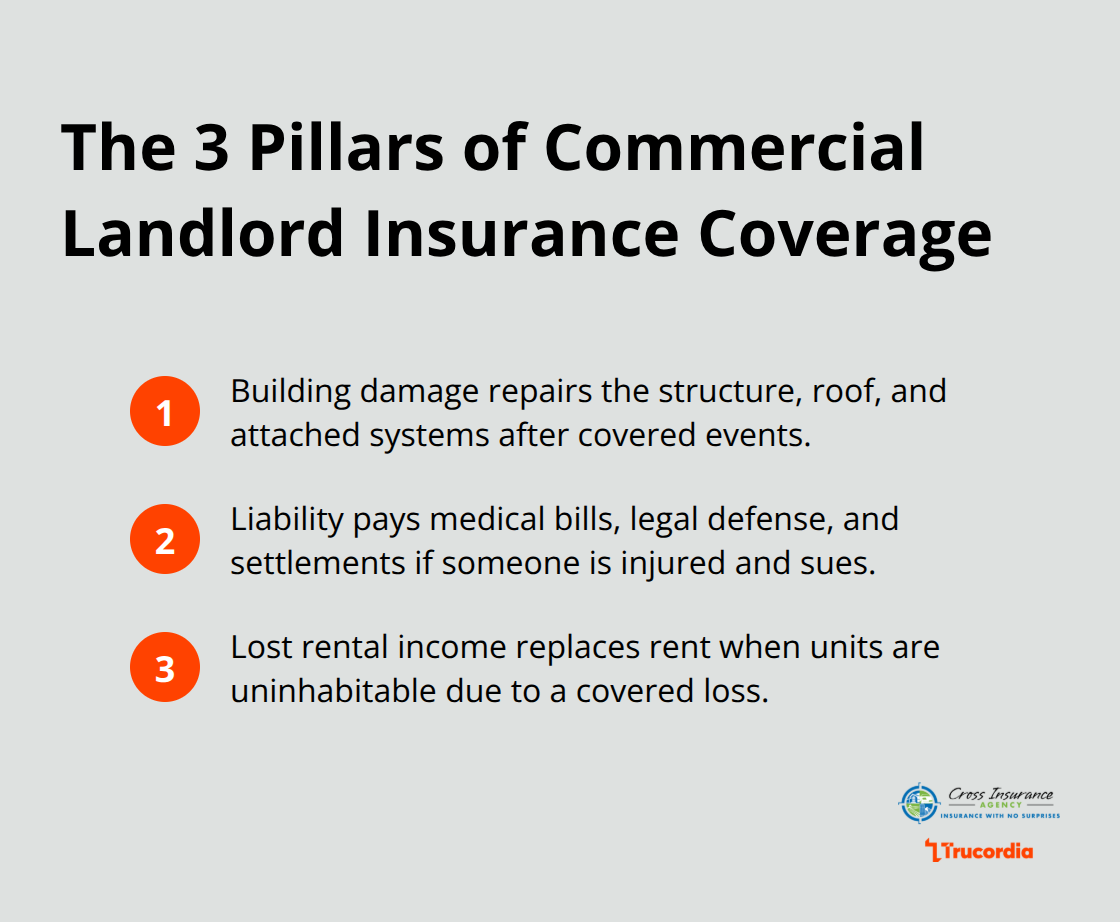
Second, it protects you financially when someone gets injured on your property and sues-liability coverage pays their medical bills and legal costs up to your policy limit. Third, it replaces lost rental income if your building becomes uninhabitable due to a covered event, keeping your cash flow stable during repairs. Washington property managers often overlook how these three components work together to create a complete safety net.
Building Damage Protection Works Differently Than You Think
Property damage coverage pays to rebuild or repair your structure after covered events, but what actually counts as covered varies significantly between policies. Standard commercial policies cover fire, theft, windstorms, hail, and explosions, but they exclude floods and earthquakes-two major concerns in Washington. The Washington State Department of Commerce reports that flooding causes substantial property damage across the state each year, which means you need separate flood insurance if your property sits in a flood zone. Earthquake coverage requires an additional endorsement to your base policy. Many property managers mistakenly assume their landlord policy covers everything, then face denial when claiming water damage from a basement flood. Your agent can review your property’s flood risk and earthquake exposure before you finalize coverage limits.
Liability Protection Covers More Than You Realize
Liability coverage activates when a tenant, visitor, or delivery person injures themselves on your property and holds you legally responsible. A slip-and-fall claim can easily exceed $50,000 in medical expenses plus legal fees, and Washington courts have awarded substantial judgments in premises liability cases. Your policy typically covers medical payments, legal defense costs, and settlement amounts up to your chosen limit-often $300,000 to $1,000,000 for multi-unit properties. The coverage applies to injuries from negligent maintenance, inadequate lighting, broken stairs, or unsafe conditions you should have fixed. However, liability does not cover injuries your tenant causes to others on the property or injuries from intentional acts. Understanding these boundaries prevents costly claim denials when incidents occur.
Lost Rental Income Keeps Your Business Stable
When a covered event damages your building and forces tenants to vacate, lost rental income coverage pays you the rent you would have collected during repairs. This coverage period typically extends 12 months from the loss date, though you can adjust limits based on your expected rebuild timeline. If your property generates $5,000 monthly in rent and repairs take four months, this endorsement replaces $20,000 in lost income. Washington property managers with mortgage obligations especially need this protection since lenders still expect payments even when your building sits empty. Some policies also cover additional living expenses if you must temporarily relocate tenants, though coverage limits and terms vary by carrier.
Why Washington Property Managers Face Unique Risks
Washington’s climate and legal environment create specific insurance challenges that generic policies often miss. Heavy rainfall, windstorms, and seismic activity expose properties to damage that standard coverage excludes or limits. Additionally, Washington’s tenant protection laws and injury liability standards mean your exposure to claims runs higher than in many other states.
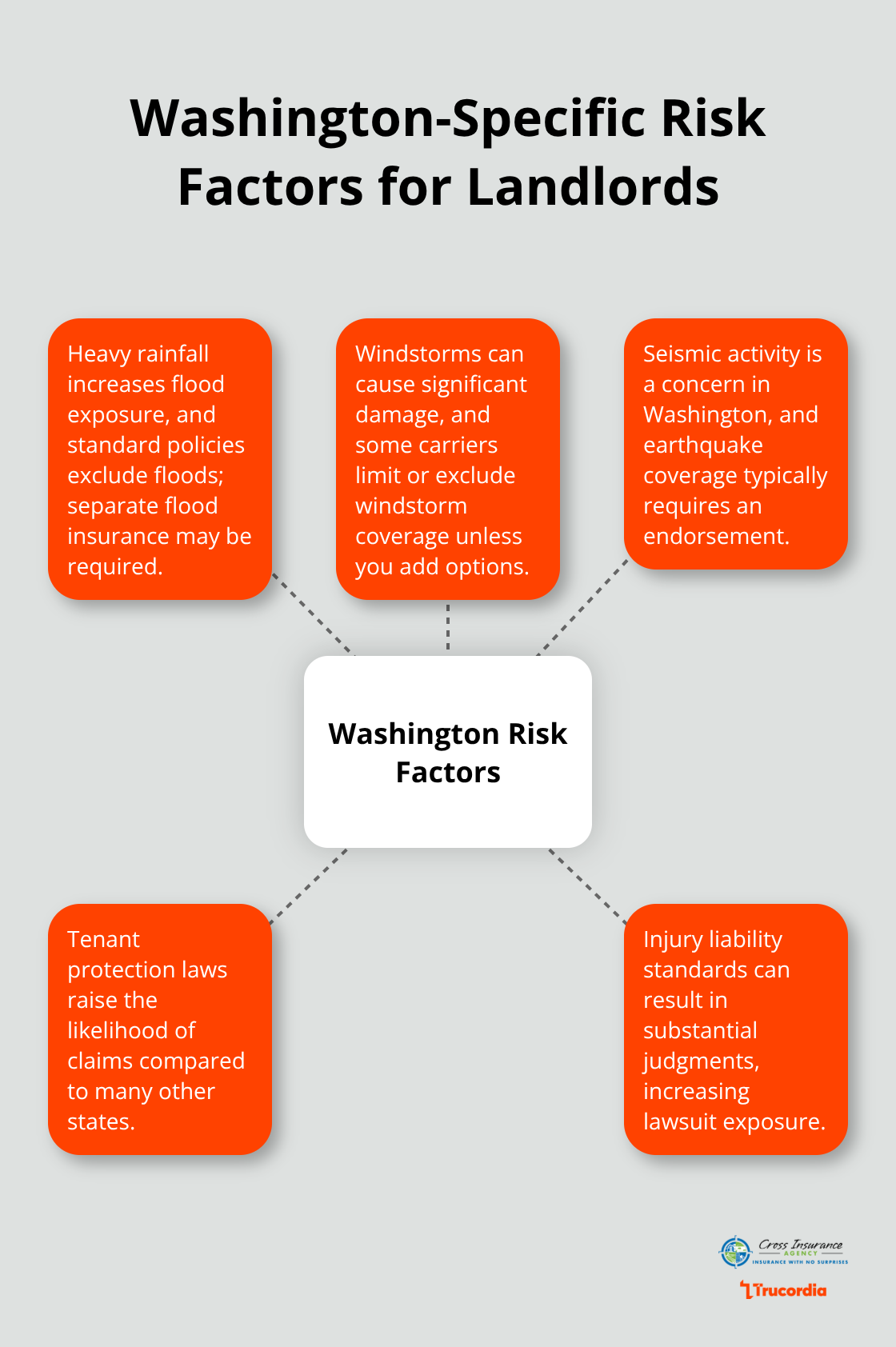
Property managers who understand these regional risks can select policies that actually match their exposure rather than discovering gaps when they file a claim.
Why Washington Property Managers Must Have Landlord Insurance
Mortgage Lenders Require Coverage Before You Close
Mortgage lenders in Washington mandate commercial landlord insurance before closing on any investment property, and this requirement exists for a reason. Your lender protects its financial stake by requiring you to carry coverage that rebuilds the building if disaster strikes, which means you cannot simply choose to go uninsured. Washington state law does not explicitly mandate landlord insurance for residential rental properties, but your mortgage contract does, making it a practical requirement for nearly every property manager with financing. Skipping this coverage exposes you to personal liability if someone sues after an injury on your property, and without insurance, they can pursue your personal assets, bank accounts, and future wages through a judgment.
Tenant-Related Claims Threaten Your Personal Finances
Washington courts have awarded substantial damages in premises liability cases, and a single major claim can wipe out years of rental income. Tenant-related claims represent your most frequent exposure since people spend most of their time inside your rental units, and accidents happen regardless of how well you maintain the property. A tenant’s guest slips on a wet floor, or a child falls from a balcony, and suddenly you face a lawsuit seeking hundreds of thousands of dollars. Your landlord policy covers these claims up to your policy limit, which means your personal finances stay protected.
Washington’s Climate Creates Constant Property Damage Risk
Washington experiences heavy rainfall, windstorms reaching 40+ mph in coastal and valley regions, and occasional seismic activity that damage properties regularly. Standard homeowners policies exclude commercial rental properties entirely, so you cannot insure your investment property under a personal policy. Without commercial landlord insurance, you absorb the full cost of repairs, lost rent during reconstruction, and legal defense fees if someone sues.
Your Policy Must Match Your Specific Property Risks
Your actual property location, tenant profile, and financial situation should shape your coverage rather than a generic template that leaves dangerous gaps. Properties in low-lying areas face flood exposure, while those near fault lines require earthquake protection. An independent insurance agent can assess your specific risks and recommend appropriate coverage limits and endorsements that address what your property actually faces.
How to Choose the Right Landlord Insurance Policy
Calculate Your Building’s True Replacement Cost
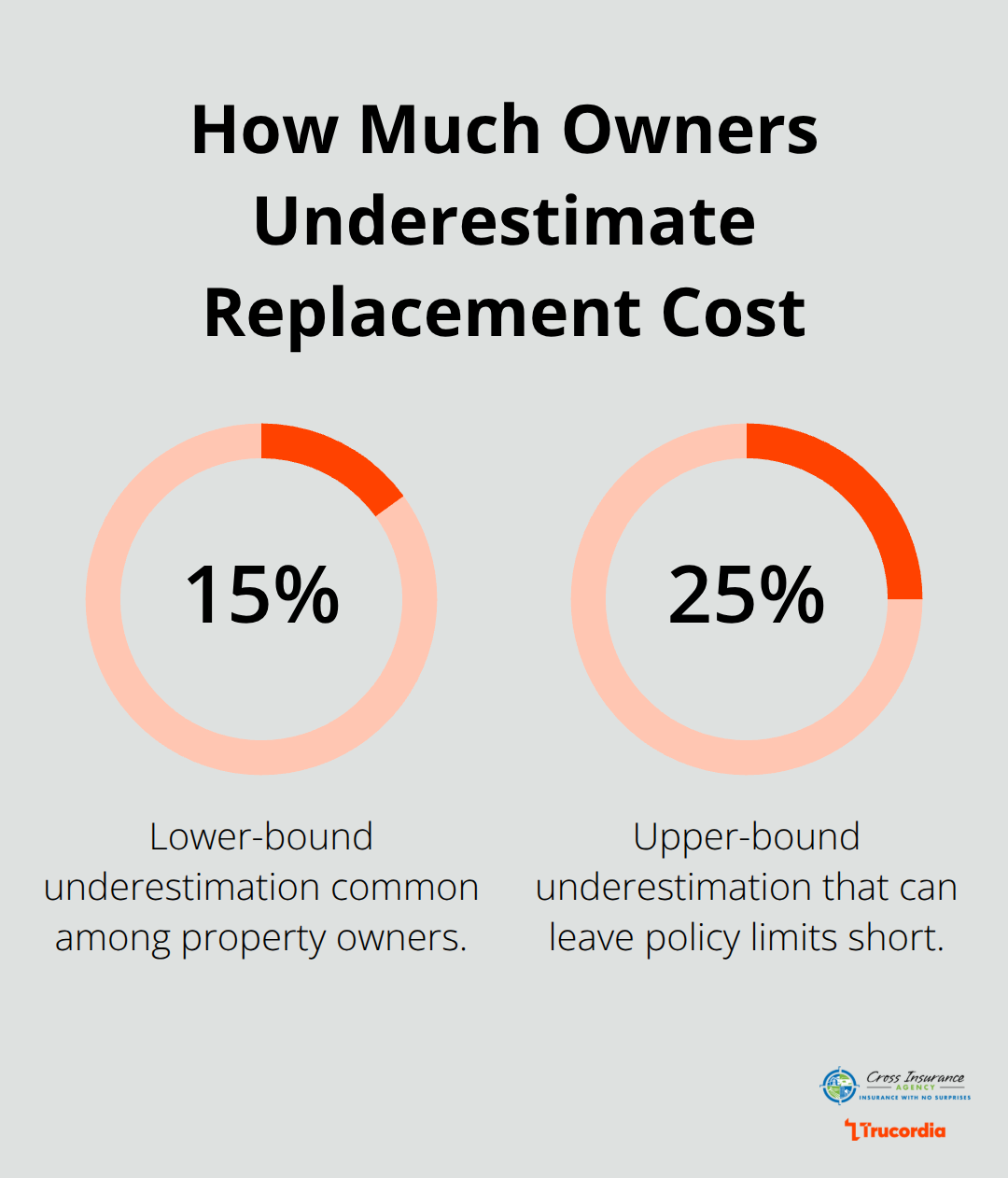
Selecting the right landlord insurance policy requires matching your coverage to what your property actually generates and what it would cost to rebuild. Start by calculating your building’s replacement cost, not its current market value-replacement cost is what it would genuinely cost to rebuild from the ground up today, including labor and materials in Washington’s current market. The National Association of Insurance Commissioners reports that most property owners underestimate replacement costs by 15 to 25 percent, which means your policy limit falls short when you file a claim. A professional property appraisal or contractor estimate provides far more accuracy than guessing based on what you paid years ago.
Account for Personal Property and Lost Income
Next, add your personal property coverage needs-if you own appliances, furniture, or equipment inside rental units, those items need separate coverage limits since standard policies exclude tenant belongings. Calculate your monthly rental income and multiply by the number of months your property would realistically sit vacant during repairs; this becomes your loss-of-income coverage limit. A four-unit building generating $8,000 monthly needs at least $32,000 in loss-of-income coverage if repairs typically take four months, though six-month coverage provides better protection given Washington’s unpredictable weather delays construction schedules.
Compare Carriers on Coverage, Not Just Price
Comparing carriers requires looking beyond premium price because the cheapest policy often excludes coverage you desperately need or sets limits so low they leave you exposed. Request quotes from at least three carriers and ask specifically what each policy excludes regarding water damage, earthquakes, and windstorm damage-these three categories account for most property damage claims in Washington. Some carriers cap windstorm coverage at 90 percent of replacement cost, while others exclude it entirely unless you pay extra, which dramatically changes your actual protection.
Set Liability Limits Based on Your Property Size
When comparing liability limits, most property managers carrying two to four units should carry at least $500,000 in coverage, while larger buildings justify $1,000,000 or more given Washington’s litigation environment. Your liability exposure grows with each additional unit and tenant, so your coverage should scale accordingly.
Bundle Policies to Save Money and Simplify Management
Bundling your commercial landlord policy with other business insurance-general liability, umbrella coverage, or commercial auto-typically saves 10 to 20 percent on premiums while consolidating your policies under one agent who understands your entire operation. This approach also simplifies renewals and claims since one agent handles coordination across all your policies rather than managing separate carriers with conflicting renewal dates.
Final Thoughts
Commercial landlord insurance in Washington protects your building structure against fire and weather damage, your finances when someone gets injured on your property, and your rental income during repairs. Without these three components working together, a single incident can drain your savings and force you to cover mortgage payments on an uninhabitable building. Most property managers discover coverage gaps only after filing a claim, which is far too late to add protection.
Start by calculating your building’s replacement cost, not its market value, since you need enough coverage to actually rebuild. Add your monthly rental income multiplied by your expected repair timeline, then request quotes from multiple carriers asking specifically about water damage, earthquake, and windstorm exclusions. Bundling your commercial landlord insurance WA with other business coverage typically saves 10 to 20 percent while consolidating your policies under one agent who understands your complete operation.
A local agent understands Washington’s specific risks and matches your coverage to your actual property exposure rather than selling you a generic template. Contact Cross Insurance Agency to discuss your commercial landlord insurance needs and protect your investment properly.
Disclaimer: The information provided in this blog is for general informational purposes only and does not constitute legal, financial, or insurance advice. Coverage options, terms, and availability may vary. Please consult with a licensed professional for advice specific to your situation. Artificial intelligence may have been used to generate text and images in some blog articles.


