

Insurance Agency Olympia, WA“Bundle your home and auto & save!” “Save by bundling your insurance policies together!”

We seem to be inundated with commercials and advertisements telling us to bundle our insurance policies together. What is the reason behind this and is this really a better option for your insurance?

Benefits of Bundling

Discounts

Some of the benefits associated with bundling your insurance policies together are discounts. The more you bundle, typically, the more you save. While the most common bundled policy is the home and auto policy, some insurance companies discount other product bundles such as auto and motorcycle. It depends on each carrier.

Consolidated Billings

Bundling your policies together can help eliminate confusion over your billing. While home insurance may go to your escrow company, it is easier to understand when your bill comes from a single source.

Access to more products

Many companies will require the auto policy to write an umbrella policy. While typically the umbrella policy is written under the property portion of your insurance. Do note, there are some companies who will just write an umbrella policy.

Why would you not bundle?

Sometimes bundling your insurance policies just doesn’t make sense. Some circumstances in which you may not be able to bundle your insurance can be:

Every once in a while auto insurance premium may seem too high, but you’re happy with your home insurance carrier. In this instance, you can use the full benefit of an independent insurance agent by writing the home with one carrier and the auto insurance with another carrier.  Just because you’re splitting the policies doesn’t necessarily mean you’ll pay more. An agent in our office can show you all the prices between several carriers and help guide you as to what makes the most sense for your specific situation.

If you’re in the market for a new or replacement insurance policy, you’ve come to the right place. Independent insurance agents are the only agents who have access to multiple top-rated insurance companies. By shopping with an independent agent, you can compare coverage, pricing, payment plans and look at bundling your insurance policies. The benefits of having an independent insurance agent don’t stop there. As your life changes, your agent can adapt to your needs finding you the right new company for your new situation such as getting married, having a teen driver and more. Thank you for the opportunity to help you with your insurance.

Comprehensive Auto Insurance Coverage Olympia, WAThe U.S. Dept. of Agriculture cites as many as 2 million collisions with animals occur each year.
It can be a scary moment when you are driving 70 mph on the freeway and a deer or other wildlife comes out of nowhere and runs right in front of your vehicle. Your first reaction may be to slam on the brakes or swerve to avoid the collision and hurting or even killing the animal. But, what happens if you do make contact with the animal and your car is damaged from it?

Are you covered?

It depends on what auto insurance coverage you have purchased. Comprehensive and collision insurance can provide you with coverage.

Comprehensive insurance covers your vehicle when you make contact with an animal while driving.

It is important to keep in mind, however, that if you decided to swerve, missed the deer or animal and strike a tree then you could be covered by collision insurance on your auto policy. Because every insurance carrier is different, their claims department will handle it with the coverage they feel is most fitting to the situation.

Safe Driving Tips To Always Remember

Driving hazards present themselves daily and can occur year-round in every state. Here are three things to always remember when it comes to driving your vehicle and wildlife.

Always stay alert

If you are driving in rural areas, be aware that wildlife is always nearby and keep a lookout towards the sides of the road.

Don’t swerve your vehicle

Swerving cannot only results in a worse injury and more severe accident, but your insurance company might find you at fault if you swerve to miss a deer and end up hitting a tree, another vehicle or guard rail. Regardless, remember to avoid swerving in general. Tightly hold the steering wheel, apply the brakes and stay in your lane.

Be more aware at night

Animals can become more active in the evenings and some travel in groups. If you see one, chances are there are more nearby. If there are two lanes, drive in the lane farthest away from the side of the road.

Tips If You Happen To Hit The Animal

Like any accident, there are a few things to always do immediately.

  • Safely pull to the side of the road. Give yourself as much space as possible then turn on your emergency lights.
  • Check to see if everyone in your vehicle is okay. Hitting an animal is startling so take a moment to take a few deep breaths to calm your nerves.
  • Call the police to report the accident and arrange a tow if necessary.
  • For claims purposes, always take photos of the damage to your vehicle and make notes.

If you have questions about your auto or vehicle insurance, contact us! We can provide you with an insurance quote or answer any of your questions.

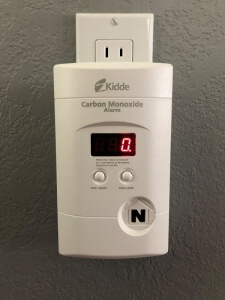
Carbon Monoxide Prevention Tips Olympia, WAWe all know the importance of having a smoke detector in our home, but what about a carbon monoxide detector?

Carbon monoxide is a colorless, odorless gas that can be lethal. Carbon monoxide can build up in your home whenever you burn fuel from a stove, grill, furnace, fire place or from your vehicles in the garage. Obviously, we need to use these appliances every day, as well as drive a vehicle, so how can we keep safe?

Simple tips to prevent carbon monoxide poisoning

  • Install a carbon monoxide detector on every level of your home. Check the batteries every 6 months, however, it should alert you with a beep with batteries are low.
  • Ensure you get your fuel burning appliances checked every year by a qualified technician. You should get in the habit of looking for rust on vents or loose/disconnected pipes on appliances like your water heater, heating system or any other gas, oil or wood/coal burning appliance.
  • Use portable gas stoves or burn charcoal outside only.
  • Keep generators outside and away from open windows only. Using them in a garage or carport can be dangerous.
  • Don’t attempt to heat your house temporarily by turning on your oven or gas stove.
  • Get your chimney checked every year. Debris can block your chimney and cause carbon monoxide to build up in your home. You can check your chimney yourself for any cracks.
  • Never leave your car running while it sits in the garage.

Did you know they make a battery operated combination detector for both a smoke and carbon monoxide? Combination detectors can save space and batteries in addition to lives.

Even a single carbon monoxide detector in your home could save lives. If you rent a home or apartment that does not currently have a carbon monoxide detector, ask your landlord to provide one. Many states require that homes have them installed. Review your state laws here.

If you have questions about your home or renters insurance, contact our agency. We can go over your current coverage or provide you with an insurance quote.

Many insurance policies contain coinsurance clauses which require policyholders to purchase an amount of insurance that accurately reflects the value of their insured property. If less than a certain percentage of the accurate value is purchased, policyholders may not be able to fully recover in the event of a loss.

Coinsurance clauses can be confusing and often leave policyholders in distress. The good news for policyholders is that a little education can go a long way in this area of insurance law. If you understand the basic principle that you must maintain insurance on a certain percentage of the value of your property, then you will be fully insured when disaster strikes.

WHAT IS COINSURANCE?
Coinsurance is a property insurance provision that penalizes the insured’s loss recovery if the limit of insurance purchased by the insured is not at least equal to a specified percentage (commonly 80 percent) of the value of the insured property. For example, if a building valued at $250,000 is insured with a policy containing an 80% coinsurance clause, the policyholder must purchase at least $200,000 in coverage. If the policyholder purchased less than $200,000, he or she would be responsible for a proportionate share of the loss.

IS A COINSURANCE CLAUSE VALID?
Most commonly, yes. Some states, including Kentucky, have passed statutes voiding coinsurance clauses in property insurance policies which insure risks associated with fire or storm damage on real property. However, in states that have not passed a statute prohibiting coinsurance clauses, courts follow the common law and uphold them.

HOW IT WORKS
The basic formula for determining whether you have enough coverage is:

Actual Amount of Insurance divided by the Required Amount of Insurance then multiplied by the Amount of Loss. This equals the amount the insurance company will pay, less any applicable deductible.

More plainly, let’s assume we have a building valued at $100,000. Under an 80% coinsurance clause, an insured would be expected to insure 80% of these values, or $80,000.

Now, let’s consider two scenarios, the amount of the loss in each case is $30,000: First, the policyholder only carries $50,000 in coverage:

($50,000/$80,000) x $30,000 = $18,750 (less deductible).. The policyholder is forced to pay, or self-insure, the shortfall of $11,250.

Second, the policyholder carries the full $80,000 required under his policy:

($80,000/$80,000) x $30,000 = $30,000 (less deductible). In this example, the policyholder would receive full benefits.

Some policyholders choose to self-insure and rely on savings. However, most policyholders purchase insurance with the intent to be fully covered. As the examples illustrate, the unknowing policyholder can suffer great financial hardship by not purchasing the amount of insurance required by the coinsurance provision.

It is important that all policyholders know whether their policies contain a coinsurance clause and, if so, whether they have purchased the amount of insurance required to receive the full benefits they expect. Regular appraisals can ensure that property values, inflation, and depreciation are taken into account in your insurance limits. An evaluation or appraisal once every three years is a good rule of thumb, but may or may not be sufficient depending on the circumstances.

*Article provided by Griffin Underwriting Services

Renters Insurance in Olympia, WARenters insurance is a great thing to have if you’re not a homeowner. We’ll answer the top questions we get about renters insurance below.
How Much Is Renters Insurance Per Month?

The cost of renters insurance can vary depending on what your coverage limits are and what you want covered. It can also vary because of your credit score or previous loss history. In general, a policy with average limits with clean credit and no loss history will run you about $15-25 a month.

What Is The Best Renters Insurance Policy?

The best renters insurance policy is a policy that provides you the best coverage at a price that you’re comfortable with.

Should I Get Renters Insurance?

Everyone should carry renters insurance if they rent a home or apartment. Renters insurance covers more than just your things. It provides you with a liability insurance policy to protect your assets. Renters insurance will protect you with coverage from theft and fires too.

Is Renters Insurance Worth It?

If you’re a renter, getting a renters insurance policy is always worth it. At less than a dollar a day, it is an affordable insurance policy that protects you and your assets.

What Does Renters Insurance Cover?

Renters insurance covers a variety of things from your personal items like your computer and couch to your clothes. It also provides you with liability protection in the event you are found liable for injuries to others you’re found liable for as well as provides you with temporary living expenses if your home becomes uninhabitable for periods of time.

Can a Landlord Require Renters Insurance?

Yes, landlords can require you to carry a renters insurance policy. Many renters assume their landlord’s insurance policy will cover their personal items in the event of a loss, but that is not true.

Can I Use My Roommate’s Renter’s Insurance Policy?

No, roommates are specifically excluded from renters insurance policies unless they are listed on the policy by name. Roommates are excluded from coverage for personal property, loss of use and liability coverage.

We always recommend a renters insurance policy. If you have questions about your renters insurance or would like to get a renters insurance quote, please contact us.

Car Insurance Olympia, WAThe cost of repairing or replacing a transmission or engine in a car can be daunting. Many people wonder what exactly is covered by an auto insurance policy. Does an auto insurance policy cover things like transmission repairs, tires, faulty wiring or worn suspension parts?

In short, no, an auto insurance policy will not pay to repair wear and tear items on your vehicle. The only time some items may be covered are when they are damaged as a direct results of a covered loss such as a collision.

Insurance is not designed to repair damaged or worn parts due to normal wear and tear of your vehicle. There is no coverage for things like mechanical failures or maintenance.

So, what options are there to cover these items? When you purchase a vehicle, some dealers offer extended warranty coverage. These warranty policies essentially extend the manufacturer warranty of newer vehicles. This is the type of insurance program that would provide coverage for things like mechanical breakdown of your transmission or engine parts.

If you have questions about car insurance, contact our agency. There are an overwhelming number of choices for car insurance out there, don’t stress! Let the professionals at Trucordia gather quotes from several insurance carriers, presenting you with the best options for your budget and needs! Our agents are here to help guide you through rate comparisons, discounts, flexible payment options and they may have some money-saving tips as well. Get your quote today!

Protect your assets with an umbrella insurance policy in Olympia, WAYou’ve worked hard for your assets. Whether it’s purchasing your home, an investment property or vehicle or saving for retirement, it has taken years and years of consistent hard work to build what you have. Did you also know that your future income can be considered an asset too? So, how can you protect your assets?

By purchasing an umbrella insurance policy.

But, I have insurance for my home and vehicles? Yes, we need insurance for our car and home. But, there are limits on how much you are protected. For example, you get into a car accident where you are at fault. Your insurance policy covers you for $250,000 in 3rd party damages. However, the other individuals in the car accident needed medical attention & their car was totaled. The total damages for the other party cost $350,000.

You are responsible for the remaining $100,000. If you have an umbrella insurance policy, it would then kick in to cover this excess liability. If you don’t have an umbrella policy, would you be able to foot the bill? If you cannot pay for the remaining balance, a court may issue your future wages to be garnished or they may target your other assets.

Would you prefer to rest easy knowing you have an extra layer of insurance coverage to protect your assets?

There are countless ways to exceed the limits of your home or auto insurance policy. Get peace of mind with an umbrella insurance policy. It eliminates the gaps and insufficient limits on your insurance policies. You’ll be amazed at how affordable coverage can be.

Four levels of protection:

By purchasing an umbrella policy, you increase the limits of liability on:

  • Bodily injury: Medical bills and settlement for injuries sustained to the third party.
  • Property damage: Damages sustained to the property of a third-party.
  • Other damage: Libel & slander, other claims expenses.
  • Legal fees: Hiring an attorney can be expensive. An umbrella insurance policy helps cover the cost.

If you have questions about purchasing a personal umbrella insurance policy, contact our agency! Our licensed agents can go over coverage options or simply provide a free quote.