Driver Insurance Centralia WA: Safe Driving With Local Coverage Options
Driving in Centralia, WA comes with its own set of challenges-from wet winter roads to local traffic patterns that demand the right coverage. At Cross Insurance Agency, we know that driver insurance in Centralia isn’t one-size-fits-all.
This guide walks you through the coverage types that matter, how to find the right local provider, and what questions to ask before you commit to a policy.
Why Driver Insurance Matters in Centralia
Washington State’s Legal Requirements for Auto Insurance
Washington State requires every driver to carry a minimum of $25,000 in bodily injury liability per person, $50,000 per accident, and $10,000 in property damage liability. This is the floor, not a recommendation. Most drivers in Centralia operate below adequate protection levels at these minimums.
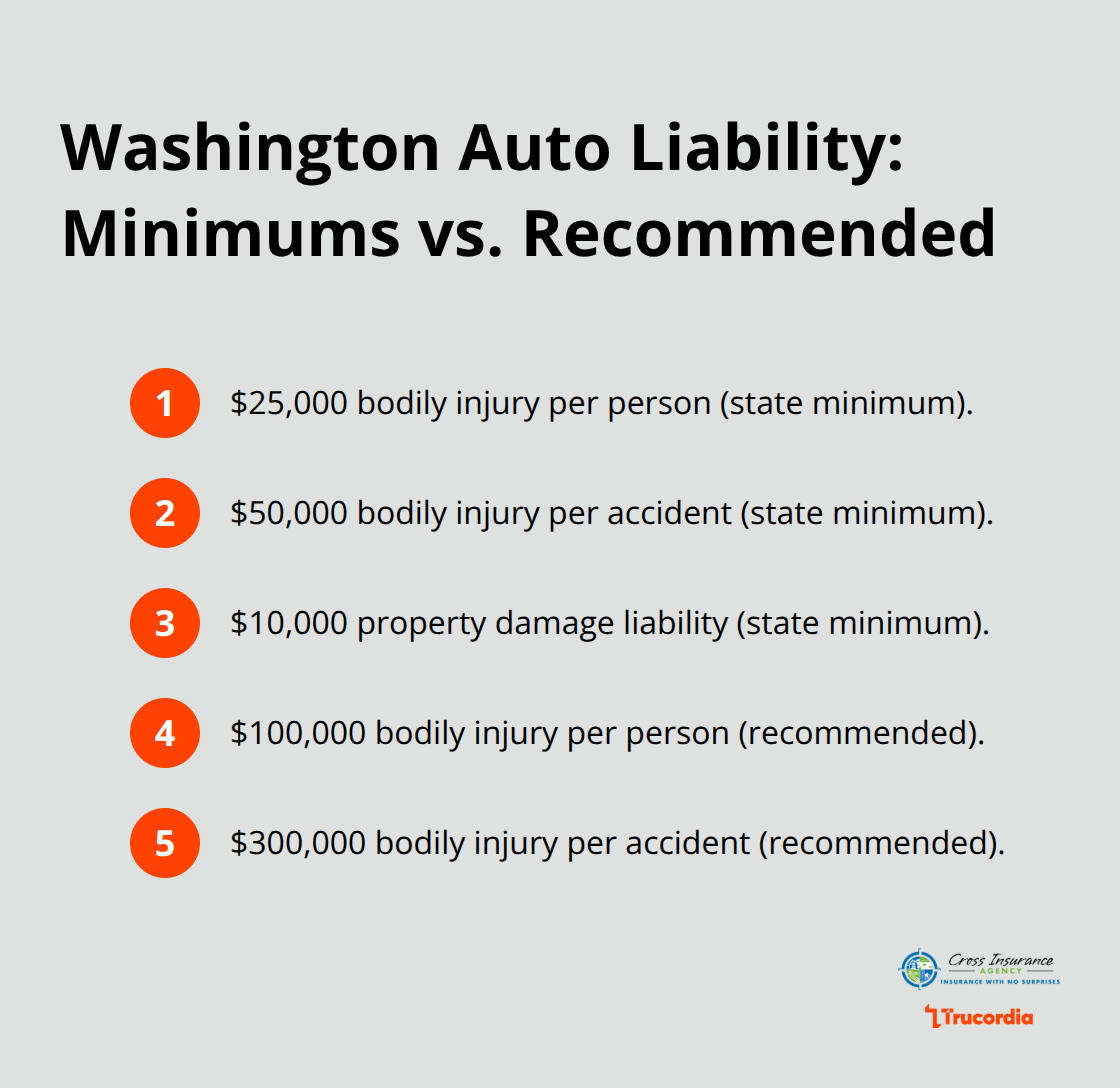
If you cause an accident that injures multiple people or damages expensive property, personal liability will far exceed what state minimums cover. We recommend liability limits of at least $100,000 per person and $300,000 per accident for most drivers, especially those with assets worth protecting.
How Local Driving Conditions Affect Your Coverage Needs
Centralia’s location on Interstate 5 creates specific driving hazards that affect what coverage you actually need. Winter weather brings wet roads from November through March, and the National Highway Traffic Safety Administration reports that wet pavement contributes to nearly 1.2 million crashes annually across the United States. Rain-related accidents spike significantly in this region. The I-5 corridor near Centralia also experiences heavy commercial truck traffic, which increases the severity of collisions when they occur.
Collision and comprehensive coverage become more valuable here than in drier climates because weather-related claims happen frequently. Local claims data shows that comprehensive coverage claims in Washington increase substantially during winter months, making this protection practical rather than optional for Centralia drivers.
Common Accidents and Claims in Centralia
Common accidents in the Centralia area include rear-end collisions during wet conditions, weather-related single-vehicle accidents, and multi-vehicle pile-ups on I-5 when visibility drops. Property damage claims from hail and falling debris also appear regularly in this region.
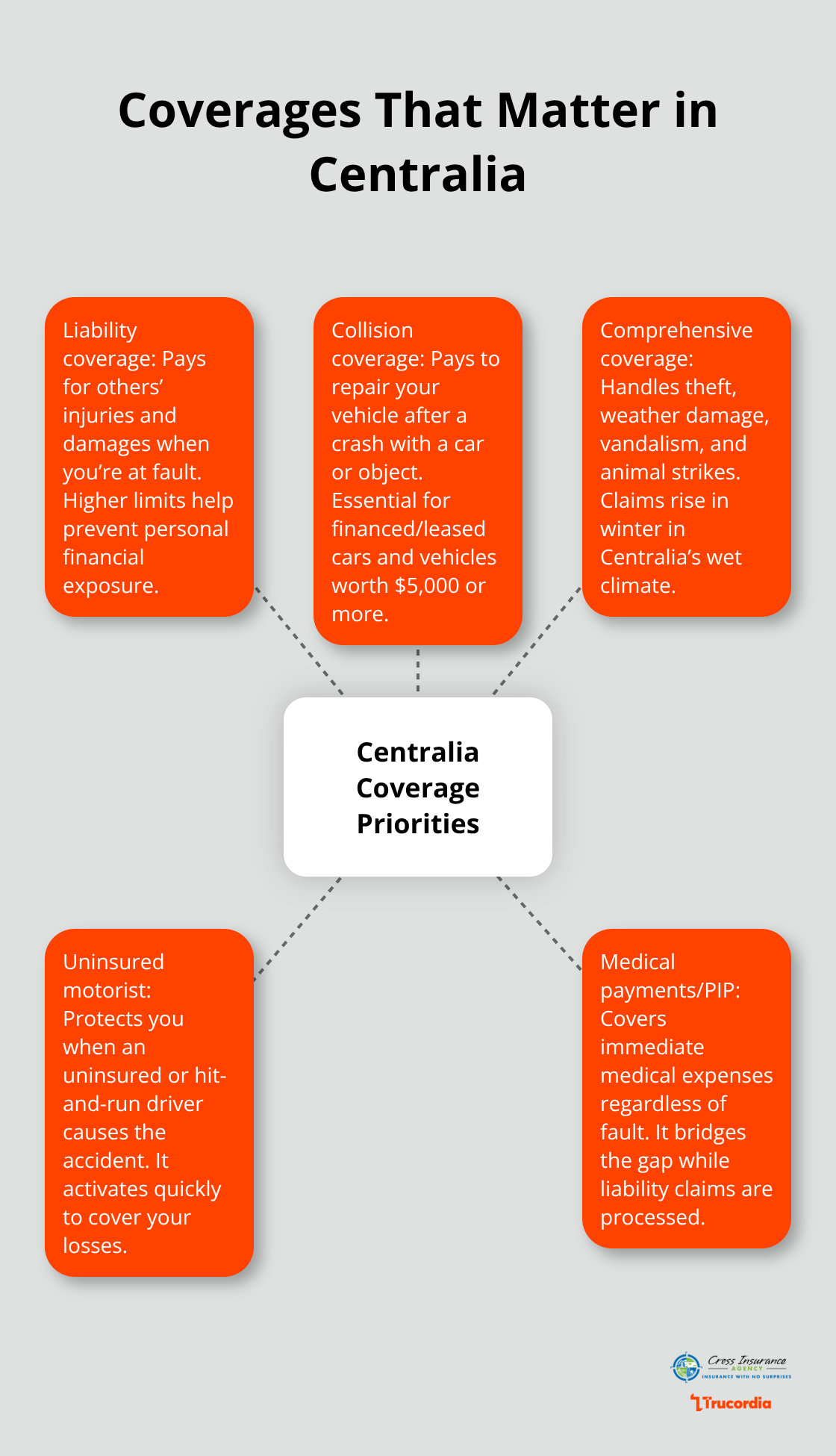
Uninsured motorist protection matters more in Washington than many drivers realize because approximately 12 percent of drivers on Washington roads carry no insurance at all. If an uninsured driver hits you, your own coverage fills the gap. Without this protection, you would have to pursue the other driver through civil court, which is expensive and often unsuccessful if they lack assets.
Personal injury protection or medical payments coverage handles your medical bills immediately after an accident, regardless of fault, and prevents you from relying on your health insurance for accident-related injuries. These coverage types transform from optional add-ons into practical necessities when you drive regularly in Centralia’s traffic environment. Understanding what each type protects sets the foundation for selecting the right policy-and knowing which coverage options actually fit your situation requires looking at the specific types available to you.
Coverage Types That Protect You
Liability Coverage: Your Legal Foundation
Liability coverage is where your legal obligation begins, and Centralia drivers frequently underestimate how quickly claims exceed state minimums. When you cause an accident, liability covers the other person’s medical bills, lost wages, vehicle repairs, and pain and suffering damages. Washington courts have awarded settlements exceeding $500,000 in cases involving serious injuries, yet many drivers maintain only the state minimum of $50,000 per accident. That gap creates personal financial exposure.
We recommend $100,000 per person and $300,000 per accident as the practical floor for anyone with a home, savings, or regular income. The cost difference between minimum and adequate coverage runs typically $15 to $30 monthly, which is negligible compared to the protection gained.
Collision and Comprehensive: Protecting Your Vehicle
Collision and comprehensive coverage protects your vehicle itself rather than others’ property. Collision pays for damage when you hit another car or object, while comprehensive handles theft, weather damage, vandalism, and animal strikes. In Centralia’s wet climate, comprehensive claims spike during winter months when hail, falling branches, and flooding damage vehicles regularly.
Collision becomes essential if you financed or leased your vehicle because lenders require it, but it matters equally for owned vehicles worth $5,000 or more. The deductible you choose directly impacts your premium-raising it from $500 to $1,000 typically saves $100 to $150 annually. Only choose a deductible you can actually pay out of pocket when a claim occurs.
Uninsured Motorist Protection: Covering the Gaps
Uninsured motorist coverage protects you when an uninsured or hit-and-run driver causes the accident. In 2023, 15.4 percent of motorists, or more than one in seven drivers, were uninsured, according to a 2025 Study by the Insurance Research Council (IRC). This coverage activates quickly and prevents you from bearing the financial burden of someone else’s lack of insurance.
Medical Payments and Injury Protection
Medical payments or personal injury protection covers your immediate medical expenses after any accident, regardless of fault, which prevents gaps between accident treatment and health insurance processing. This coverage activates within days while liability claims take months to resolve, making it valuable for accident-related injuries requiring immediate care. These coverage types transform from optional add-ons into practical necessities when you drive regularly in Centralia’s traffic environment, and selecting the right combination requires understanding how each one works with your specific situation and driving habits.
Finding the Right Local Insurance Provider
Why Independent Agents Understand Centralia’s Specific Risks
Independent agents in Centralia operate differently than national call centers or online quote engines because they carry relationships with multiple carriers and understand local claims patterns. Licensed agents shop coverage options across top-rated carriers rather than pushing you toward one company’s products. This matters in Centralia because weather-related claims spike predictably each winter, and agents who handle these claims regularly know which carriers respond fastest and which ones have stricter underwriting for drivers in high-risk corridors like I-5. When you call a national insurer’s 1-800 number, the representative rarely knows whether hail damage claims in your zip code take three weeks or three months to settle. Local agents do.
Comparing Quotes Requires More Than Price
Comparing quotes requires more than checking lowest price because the cheapest option often excludes coverage you actually need or includes deductibles that make claims impractical. When you request quotes from three different agents or carriers, bring the same coverage limits and deductibles to each one so you’re comparing apples to apples. A $500 deductible collision policy at $95 monthly means nothing if another quote offers $1,000 deductible at $75 monthly because the monthly savings disappear after your first accident.
Ask each agent to explain what their lowest quote excludes and why their recommended option costs more. The agent who takes time to explain the gaps rather than just showing you numbers will likely serve you better when you file a claim.
Key Questions Before You Commit to a Policy
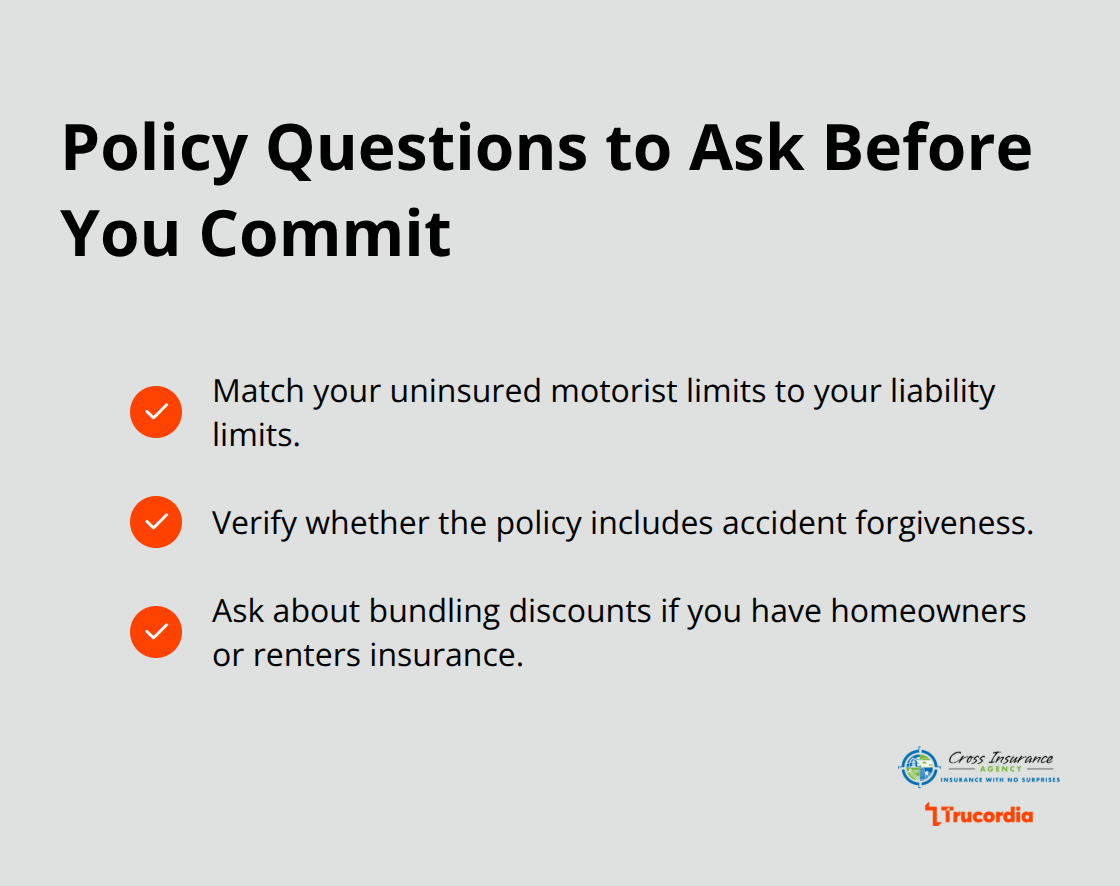
Before you commit to any policy, confirm that uninsured motorist coverage limits match your liability limits because having $100,000 liability protection but only $25,000 uninsured motorist coverage leaves you unbalanced. Also verify whether the policy includes accident forgiveness, which prevents your rates from jumping after your first claim. Ask about bundling discounts if you carry homeowners or renters insurance (these discounts often range from 10 to 25 percent depending on the carrier). These details separate policies that merely meet legal requirements from policies that actually protect you through Centralia’s specific driving environment.
Final Thoughts
Driver insurance in Centralia, WA protects your financial future against the specific risks you face on I-5 and local roads. State minimum coverage of $50,000 per accident leaves most drivers dangerously exposed, especially when wet winter conditions make collisions more severe and frequent. Adequate liability limits of $100,000 per person and $300,000 per accident cost only $15 to $30 more monthly than minimums, yet that difference prevents catastrophic personal liability if you cause a serious accident.
Collision and comprehensive coverage matter in Centralia’s climate because weather-related claims happen predictably each winter, while uninsured motorist protection addresses the reality that one in seven drivers on Washington roads carry no insurance at all. Medical payments coverage pays your accident-related medical bills immediately rather than waiting months for liability claims to resolve. These coverage types work together to create actual protection rather than just legal compliance.
Finding the right provider means working with someone who understands Centralia’s specific driving environment rather than relying on national call centers that treat your zip code like any other. Independent agents shop multiple carriers, know which companies respond fastest to local claims, and explain why certain coverage combinations make sense for your situation. Contact us today to get quotes tailored to Centralia’s specific driving environment.
Disclaimer: The information provided in this blog is for general informational purposes only and does not constitute legal, financial, or insurance advice. Coverage options, terms, and availability may vary. Please consult with a licensed professional for advice specific to your situation. Artificial intelligence may have been used to generate text and images in some blog articles.


