We live in the digital age. We can get instant results like game scores, recipes and silly videos at the touch of a button. You can also get instant quotes for auto insurance, home insurance and more from specific carriers, but what you can’t do is have someone make sure that you are getting the best insurance rates for your situation and needs. That is why having a local, independent insurance agent is a smart idea.

  • Lower rates: A local, independent insurance agent will work hard to save you money. They have the ability to quote from many different insurance carriers and are able to provide you with several carrier options. Since their business is consumer-driven, your agent will provide a level of service and care with which many large carriers cannot compete.
  • Ease of service: Your local, independent insurance agent can service your insurance policies, so if there is a problem there is only one number to call if you have questions about your policy. Your agent also lives in your area so they are able to be honest and let you know if you really need specialty coverages like flood or earthquake.
  • Adaptability: Did you get a new car, buy a house or get a boat insurance policy? Your local, independent agent can assist you with all of that. Your agent is able to quote multiple types of insurance coverage like personal umbrella or business insurance as your needs change over the years. They can also update your existing policies with ease.
  • Jargon: Your local, independent insurance agent is an expert when it comes to the insurance world. If you are confused to the meanings of Comprehensive, UMBI, PIP or any of the other coverage options, your agent will be able to explain your coverage in plain, easy-to-understand language. When you purchase any type of insurance, there are a lot of ins-and-outs to consider, your agent will be there to walk you through your coverage and make sure that you understand what may or may not be covered.
  • They have it all: It bears repeating: a local, independent insurance agent is a one-stop shop. They offer auto, home, boat, motorcycle, renters, flood insurance and the list goes on. If you are looking for a coverage that they do not offer, your local, independent insurance agent can recommend a carrier who can assist with your needs.

When looking for insurance, consider your local, independent insurance agents in Olympia, WA – Trucordia. They offer personal insurance coverages for your home, vehicle and “toys.” Give Trucordia a call today or visit the insurance website 24/7 to see the difference of working with a local, independent agent.

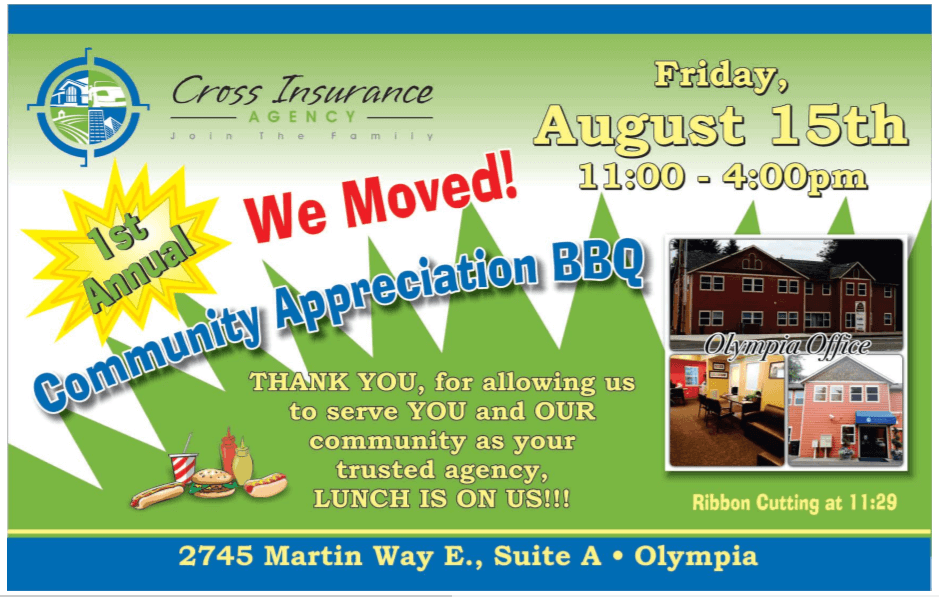
Olympia Insurance AgencyThank you to the many who joined us for our Olympia Grand opening! We look forward to continue serving the Olympia community with great service, competitive insurance rates and giving back to our community. Thanks for the support Olympia! Click here to view the pictures!


College is an exciting place. New experiences, friends and knowledge await wherever you go.  Before the fun starts, there are some decisions that need to be made: Will you live on or off campus? Will you work while in school and will you be taking your vehicle with you? Check with your school first, as some colleges and universities do not allow freshman to have vehicles on-campus. You should also consider the cost of a parking permit and remember that parking lots are not the friendliest or secure places for vehicles that are not driven that often. When it comes to your auto insurance, talk to your agent as there are many factors that could influence the price of your premium.

College students and auto insurance Washington:

  • Location: Where you attend school matters when it comes to your auto insurance. Are you attending school more than 100 miles from home? Will you be living in a dorm or off-campus? Parking in a garage or on the street. All of these factors will influence the price of your auto insurance premium. If you are leaving your vehicle with your parents while away at school and will not have regular access to your vehicle, you may be eligible for a distant student discount.
  • Coverage: If you plan on attending a school in a different state, ask your insurance agent if you insurance coverage limits are enough. The legal insurance requirements in your state may be insufficient for the legal requirements where you attend school. If you don’t have underinsured motorist coverage (UMPD/UIM), it may be worth considering as cars tend to get dinged, scratched and hit in large parking lots.
  • Theft: While college can be filled with great experiences, there can be some bad with the good. Break-ins and thefts can occur at your dorm, apartment and car. Renter’s insurance may help to help recoup costs for thefts that occur in your dorm or apartment. An auto insurance policy may cover the physical damage to your vehicle like a broken or smashed window, however there a no provisions for the loss of personal property like laptops, cell phones, etc. It is important to remember that valuables should not be left in unattended vehicles.

There are several discounts that could be available to students as they go through school like a good student discount or multi-policy discount. For all your insurance needs, talk to the insurance experts at Trucordia in Olympia, WA. No matter where you are attending school, they can assist you with making sure your auto insurance policy has you completely covered. They can also assist with setting up a renter’s insurance policy for your dorm or apartment. For more information about Trucordia or the insurance products they offer, visit their insurance website 24/7.

Join Trucordia for our first ever, annual Community Appreciation Barbecue, where we honor you – Our customers and community members! Lunch will be on us, so bring an appetite!

Cross Annual Olympia

Getting out on the open road with the family can be a great summer pastime. Whether your road trip takes you to a national park, a beach or to visit family, it can be a great opportunity to bond as a family that includes your dogs too! Loading Fido up in the family vehicle doesn’t have to be stressful and making your dog comfortable in the car can be quite easy.

Traveling with dogs in Washington:

  • Safety: Safety truly comes first at all times when riding in a vehicle – this goes for people and pets. An unsecured dog wandering the vehicle can be a distraction and a hazard. Large dogs can bump the driver, causing them to swerve and small dogs can get underfoot, under a gas pedal or brake pedal. Securing your dog may also help keep them safe in the event you are in an auto accident. There are many options for securing your dog in a vehicle. There are car seats that have an interior harness to secure the pup and a place to secure the car seat to a seatbelt, minimizing the risk of the car seat bouncing around. Another option is a harness that attaches directly to the seatbelt. This allows the dog some free movement, but it is restricted to a small area. Then there are barrier options, like a crater or a seat barrier. When purchasing a travel crate, make sure the dog has plenty of room to stretch and is not too cramped. A seat barrier works well for SUVs and hatchbacks.
  • Entertainment: Just like the people in the car, your dogs will need some entertainment as well. Bring along favorite toys, chews and treats may go a long way to keep a bored dog from barking, jumping and perhaps trying to eat the interior of your vehicle. Don’t forget to bring spill-proof water and food containers!
  • Take a break: Get out and stretch your legs and your pup’s! Leaving the vehicle and giving your dog a little room to run (search for off-leash dog parks along your route) can go a long way to eliminating a carsickness or boredom in a dog. It also gives them a chance to use the “facilities” in an outdoor setting versus your vehicle.
  • Destination: Make sure that your destination is pet-friendly. If you are staying in a hotel or vacation rental, ask about their pet policies ahead of time, it is also helpful to locate the closest emergency vet, just in case.

Taking steps to ensure that everyone on your road trip is happy and safe will lead to less stress overall. In some states, if you have a Progressive auto insurance policy, you may have Pet Injury coverage, which helps cover vet expenses (up to $1000) if your pup is injured as a result of an auto accident. Before you head out on the open road, check the details of your auto insurance coverage with your Trucordia agent in Olympia, WA. They can assist you with amending an existing policy or setting up a new policy. You can also visit their insurance website 24/7 to learn more about the other products they offer like boat insurance or motorcycle insurance.

We have all heard the auto insurance commercials talking about the discounts this insurer or that insurer offers. There are the standard ones: multi-policy, multi-vehicle, etc., but there may be some other discounts that drivers are not aware of. We have compiled some of the most common auto insurance discounts below. Could you be saving money with these discounts?

Auto insurance discounts in Washington:

  • Multi-policy: Bundling multiple polices like auto insurance, home and boat with the same insurance carrier can save you some money.
  • Good or distant student: If your student keeps their grades above certain level (as designated by the insurer) they may be eligible for a good student discount. The insurance carrier will need proof, typically sending a transcript will suffice. If your student is attending college at a distant (typically more than 500 miles from home, but that varies by carrier) you may be eligible for a discount on the vehicle since it may not be driven as much.
  • Education level: Like an extension of the good student discount, drivers who hold advanced degrees, like a bachelor’s degree, may qualify for a discount.
  • Defensive Driver: Taking a carrier approved defensive driving course could earn you a discount on your auto insurance policy. Check with your insurance agent, as this type of discount may be limited to certain age groups.
  • Multi-vehicle: Like a multi-policy discount, insuring multiple vehicles with the same carrier may earn you a small discount.
  • Green vehicle: If you drive an electric or hybrid vehicle, you may be eligible for a discount. Ask your agent to see if your vehicle qualifies.
  • Anti-theft: Vehicles with anti-theft systems statically tend to be stolen less often, thus a lower risk. You may be entitled to a small discount if your vehicle meets the criteria.
  • Anti-lock brakes: The anti-lock brake feature is standard on almost all new vehicles. Check with your insurance agent to see if your carrier provides a discount for anti-lock brakes.
  • Safe driver (accident free): Many major insurance carriers will award safe driving discounts to drivers who have been accident free for a number of years. The criteria varies between insurance carriers.
  • Military: Active and veteran military members are often eligible for discounted auto insurance. Ask your insurance agent to see if you qualify.
  • Early quote/signing: If you are looking to change insurance carriers or upgrade your auto insurance, getting a quote (and signing up) before your current policy has expired may get you a discount. You may need to get a quote within a certain number of days prior to your policy expiration, so check with your agent.
  • Paid-in-full: You’ll see the discount reflected in the price when you are presented with your options for paying your auto insurance policy. Paying off the policy in full will cost you a little less than paying every month.
  • Paperless: Don’t want to get a paper statement? Great, you get a discount. Most major insurance carriers offer discounts for customers who choose to do automatic billing and receive emails rather than paper statements.
  • Loyalty: Sticking with your insurance carrier for three or more years could earn you a discount for every loyalty milestone you hit. Typically these rewards not only include a discount on the cost of your policy, they can sometimes include accident forgiveness!

While most of these discounts are small, a few added together could amount to some real savings. Be sure to speak with your Trucordia agent today the discounts that may be available to you. For more information about Trucordia in Olympia, Washington or the insurance products we offer like home insurance and RV insurance, visit our insurance website 24/7.

It is fairly easy to tell the difference between a car and a truck or a motorcycle and a moped, but when it comes to boats and yachts, differences may not be as evident. In insurance terms, the differences between a boat and a yacht are very clear.

How are boats and yachts defined in Washington?

  • Boats: A boat is generally defined as a vessel under 26 feet in length. This can include speed boats, fishing boats (for recreational purposes) and classic or antique boats. Standard boat insurance policies can include physical damage coverage, liability coverage, personal property coverage and towing and assistance coverage. Many of the policies are yearly policies so there is no need to be concerned about your boat when it is moored or in a dry dock for the winter months. Boat insurance policies often include limits on navigational areas or be an agreed value policy which means you and the insurance carrier will agree upon a set value of worth for the boat before a policy is drafted. This may help recoup costs in the event the boat is lost or damaged beyond repair. A basic boat insurance may not include extra coverage for uninsured/underinsured boater coverage or coverage for fuel spills, but a yacht insurance policy may include those items. So, when insuring a boat, be sure to ask your agent about these coverages because most times, they can be added.
  • Yachts: A yacht is defined as a vessel over 26 feet in length and used for mostly personal or recreation purposes. Yacht insurance tends to be more inclusive than your standard boat insurance policy. Those extras that you may pay more for in boat policy, like fuel spill coverage, towing and additional personal property coverage, may be generally included in your yacht insurance policy. There are also custom coverage options that may be available just for yacht insurance. Custom coverages may include additional hurricane protection if you are sailing or docking in an area during hurricane season. It may also include an option to extend or create a custom navigation area as most standard boat insurance policies only offer coverage the extends 75 miles past the U.S., Canadian or Mexican coastline. If your yacht includes a dinghy, there is a coverage option for that as well, though it may be limited to anything under 16 feet in length.

Whether you are considering purchasing a boat or a yacht or wondering which category your current sea-faring vessel falls, the insurance experts at Trucordia in Olympia, WA can assist you with all your boating insurance needs. Trucordia agents can also assist you with insuring other items like your autos, homes or adding a personal umbrella insurance policy for additional protection beyond your auto and home insurance policies. Whatever your insurance needs, let Trucordia help. Visit their website 24/7 for more information about the agency or the insurance products they offer.

At some point this summer, you will most likely use fire for something. Whether it be a camp fire, fireworks or a grill, the potential for both fun and hazards is present. We put together a few fire safety tips for using fire (and its byproducts) safely and responsibly.

Fire Safety Washington:

  • Campfires:  Make sure that your campfire is well contained, either in a pit or surrounded by rocks and the area around and above it is free of flammable material. Watch sparks and shifts in the fire to ensure that the flames stay within the pit. Be sure to extinguish your fire prior to sleep and when you depart the camp site. Having a bucket of water or a fire extinguisher handy is a very good idea. If a forest or brush fire should start, you’ll want to contact the authorities (in many cases a camping host) immediately.
  • Fireworks: Whether you are shooting off fireworks in your neighborhood or at a campground (make sure this is within the confines of the campground rules), you should be prepared for anything. When lighting fireworks, make sure that there is nothing flammable around your area and keep fireworks away from houses and other structures. Keep a bucket of sand available to dispose of used fireworksand never throw used fireworks directly into the garbage as they could spark a fire. Make sure to keep a hose, water bucket or fire extinguisher in the event a rogue fireworks sparks a blaze. Should a fire occur dial 911 immediately.
  • BBQs: Barbequing is a summer pastime. Whether you prefer a charcoal or gas grill, you should take some safety precautions. Never grill too close to a dwelling wall or under an awning or porch, the heat from the grill could cause a spark. If you are storing a grill close to a dwelling, make sure the grill is completely cooled before putting it in place. When using a charcoal grill,closely follow the direction on the lighter fluid as large flames could start a fire and injure anyone standing too close.
  • Other causes: BBQs, fireworks and campfires are not the only catalysts when it comes to fires. Sparks from ATVs, motorcycles, RVs and cars can start fires with the driver never knowing. Making sure your regular and off-road vehicles are in good repair may help prevent a random spark from starting a blaze.

According to the National Parks Service, “As many as 90 percent of wildland fires in the United States are caused by humans.” What it doesn’t mention: if you start a fire you may be liable for any restitution and damage costs, which could result in you being responsible for hundreds of thousands of dollars. Using proper safety techniques and having the right amount insurance may help cover some of those costs in the event you are found liable or negligent in a fire. Talk to your Olympia, WA Trucordia agent about how your home insurance policy may help protect you should you start a fire on your property or on a neighbor’s property. Having a personal umbrella policy may help reduce damage costs from an exhausted home insurance policy or negligence from a fire started away from your home. Ask your Trucordia agent what may be right for your situation and budget. You can also visit our insurance website 24/7 to see what other insurance products we offer like boat or flood insurance. We hope you have a safe summer!

A camping trip is one of the great adventures a person (or family) gets to have each summer. Our area is filled with great camping spots, some nestled in the woods some near streams and lakes, but most are great for meeting new friends. Preparing for this wonderful American tradition a camping trip can be challenging as you have to be ready for many different scenarios: wild animals, weather changes, illness, etc. Don’t fret, we are here to highlight some of the basic necessities one may need on a weekend camping trip.

Camping Basics in Washington:

  • Food:  Food and drink is a very important component of any trip. Most folks pack your standard camping fare like hot dogs, s’mores and plenty no-fuss ready to eat snacks. You’ll want to pack some energy bars, nuts, fruit and plenty of water if you plan on doing any physical activity as low blood sugar (and heat) can lead to dizziness and possibly fainting. Storing your food is also extremely important. Making sure all food is tightly sealed in containers will help keep pests and wild animals out of your campsite, you should also make sure that cold food stays cold to avoid food poisoning. Be sure to pack all food away in the evenings in a locked car away from any sleeping quarters as bears and other wild animals may enter camp looking for a snack.
  • Weather: Be prepared for all kinds of weather and be aware that it can change at any moment. Pack enough clothes to layer should it get chilly or rainy, hats and umbrellas for staying out of the sun and proper food gear for hiking or for swimming (including life jackets if you plan on using a canoe or raft). Being prepared for the weather also means being prepared for the pests warm weather brings. Mosquitoes and ticks can be an annoyance, but they can also cause health problems like West Nile Virus and Lyme disease. Citronella candles (or torches) and repellant sprays can help protect against mosquitoes and ticks. For ticks, check yourself and your pets daily for ticks.  They prefer dark, warm areas like behind the knees, ears and inside the belly button. The Centers for Disease Control and Prevention has some great tick prevention and removal tips.
  • Fires: Whether you are camping with a tent or in an RV or camper, you will most likely be starting a fire (in an approved fire pit) to cook food or just to enjoy. Make sure that your fire pit is well contained and the area around and above it is free of flammable material. Watch sparks and shifts in the fire to ensure that the flames stay within the pit. Having a bucket of water or a fire extinguisher hand is a very good idea. If a forest or brush fire should start, you’ll want to contact the authorities (in many cases a camping host) immediately. It is not just camp fires that can cause a forest or brush fire. Sparks from motorcycle, ATV or RV tail pipes can also cause a spontaneous fire. If you are bringing any of these “toys” along take to your insurance agent about a personal umbrella insurance policy, which could help mitigate damage and restitution costs if you were found liable or negligent for a brush or forest fire.
  • Cleanliness: Not just personal hygiene, but keeping your campsite clear of trip hazards, such as unused toys, firewood, ropes or other items that could cause a trip. Remember that you’re usually leasing a space of land to camp on, but this won’t stop others from walking through your site. Be sure they have a safe place to travel through and that you can’t be found liable for someone injuring themselves while being in or around your RV (should you be using an RV). You can protect yourself with vacation liability insurance coverage that is available with specialized RV policies such as those offered by Progressive Insurance.

At Trucordia we want you to enjoy your summer camping trips. While we can’t assist you with building fires and setting up a campsite, we can help ensure that all your RVs, ATVs and motorcycles are insured with the right policy to fit your needs and budget. Give your Olympia, WA Cross agent a call and see the difference of working with an independent agent. You can also visit our insurance website 24/7 for more information about the other insurance products we sell, like home insurance or auto insurance.

At some point during this past winter, you may have lost power and depending on for how long, you may have gone and purchased a generator. Some purchase generators for the “just-in-case” scenario, while others use them for RVing or running a small shop. Regardless of why you have a backup generator, they can be a great tool for helping to keep warm and possibly running some small appliances or light fixtures (depending on the size of your generator.) There are some key safety issues that one should take into consideration when purchasing and using a portable generator during inclement weather or even while camping.

Generator Safety 101 in Washington:

  • Power: When trying to pick out a generator you need to consider what exactly it will be powering. For lighting, heat and appliances, there are specific wattages that need to be met. If the generator is not powerful enough to run these items, both the generator and the appliances, etc., could be damaged. A simple way to figure this out is to look at the generator “running/rated watts.” If the running watts on a generator lists it as 1500, then it can run up to 15 100 watt light bulbs. Some appliances such as fans have a starting surge. So, if a fan is 200 watts, but has a 600 watt power surge when you turn it on, you technically only have 900 watts left on your generator. If running other appliances, remember, 1kw = 1,000 watts, volts x amps = watts, so 3 amps at 120 volts = 360 watts.
  • Placement: You never want to use a generator indoors. Running a generator indoors is essentially like running car in a garage with the door closed. Generators release carbon monoxide (CO) and even in small doses that can be deadly. Installing a battery-operated CO monitor, like this, is a great way to help protect yourself from CO poisoning. The generator should be placed at least 25 ft. from the home or camper and should be in a cleared area. Generators can produce quite a bit of heat and could spark a fire in the right conditions, so if you’re out camping, ensure the area is free of debris. Be cautious when using a generator in wet conditions, a pop-up open air canopy could keep the generator dry. If the weather is wet, use covers on extension cords and remember to never touch electrical outlets or plugs with wet hands.
  • Powering the generator: Generators run on fuel, diesel, unleaded or 2 cycle depending on the type you purchase. When buying and storing fuel, only use approved containers. Every city has different regulations regarding the amount of fuel that can be stored in a residence and where it can be stored, check your local regulations or check with your local fire department for more information on fuel storage.
  • Making it permanent: You may decide that you like your generator so much that you want to make it a permanent fixture at your home in case of future power outages. In that case, you will want to contact a reputable electrician, as attaching a generator to your electrical system can be complicated. Never try to plug a generator directly into an electrical outlet, it could cause serious (expensive) damage to your home system.

Let your Trucordia agent know if you have a generator permanently attached to your home electrical system. You can also let your agent know if you have made any other upgrades to your home that could result in a home insurance discount, like a security system or an impact resistant roof. The insurance experts at Trucordia in Olympia, WA are here to assist you with all of your insurance needs. Visit our insurance website 24/7 for more information about us or any of the insurance products we sell like RV insurance or renters insurance.